Food and Phantom Warmth- Estrangement From My Bangla Roots: Reflections on my Relationship with my Desi Side
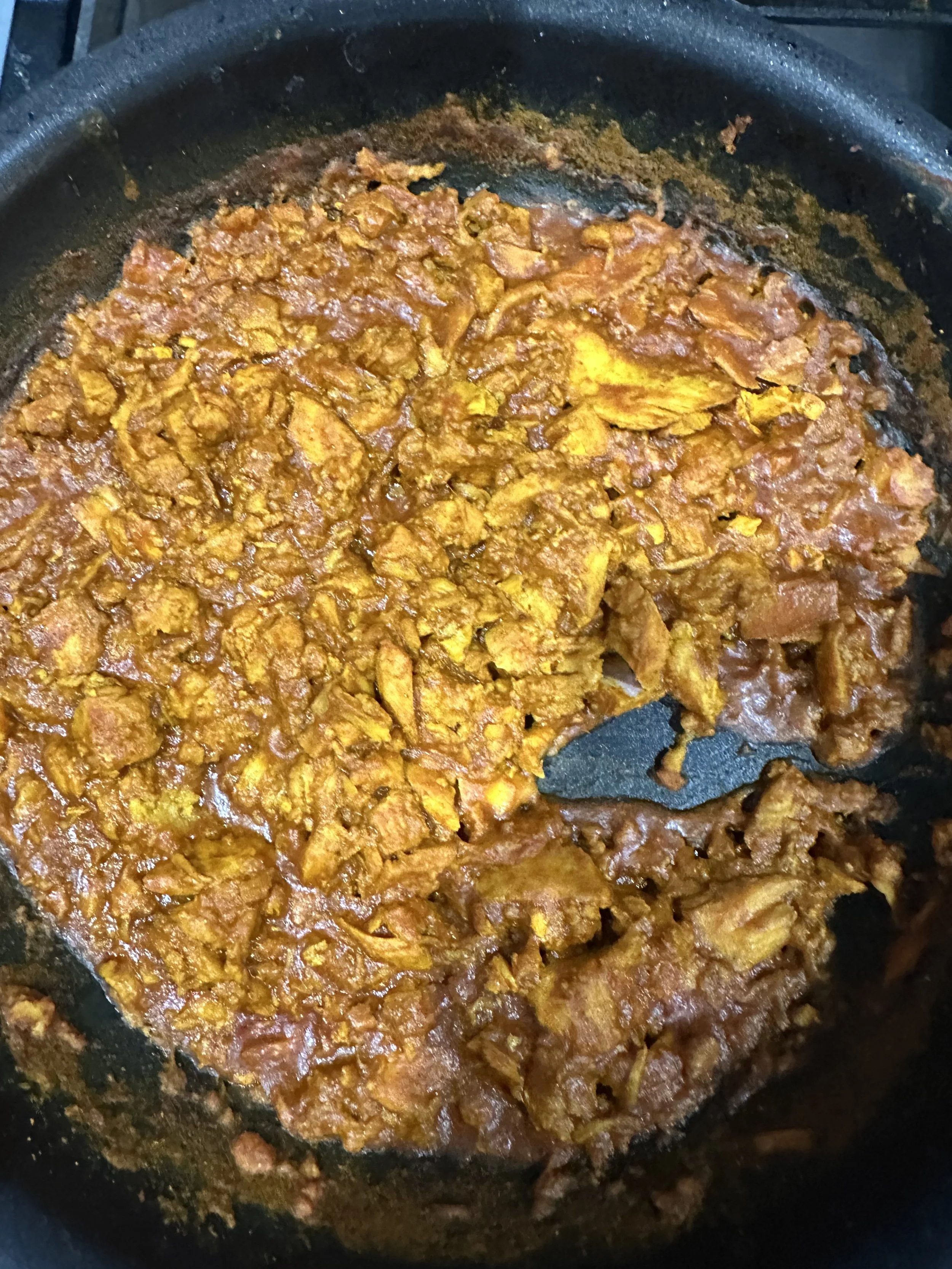
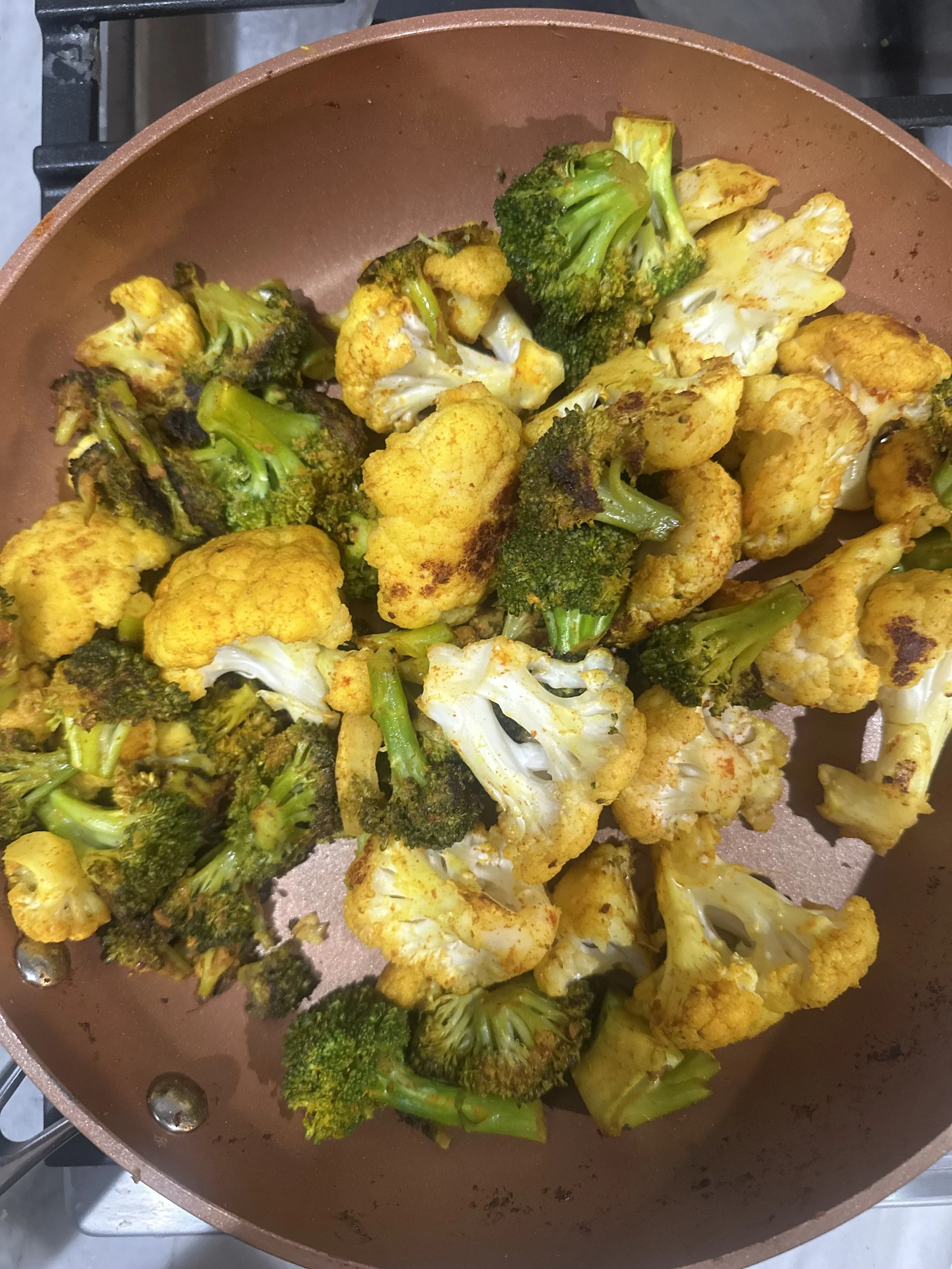
It is past midnight (it’s midnight, March 18 when I wrote this originally so the night of 3/17) , and I’m playing “Krishno” by Habib Wahid & Kaya while spicy cauliflower and broccoli are simmering on the stove. I’ve not had much faith in myself when it came to cooking food that actually ended up tasting good until recently; my mom was visiting Texas and she showed me how to mix ingredients from local desi markets into my food to make it tasty. She initially showed me how to work with salmon— then I video called her the week after to learn how to prepare tuna like her and Dadu, my paternal grandma, my only living grandparent since the past decade, have made for me several times, spicy and flavorful. Of course they’d made several other dishes for me throughout my lifetime, and a greater variety when I actually used to eat meat prior to me becoming pescatarian. My Minu Fupu, whom I also refer to as Choto Fupu, or my “small” (younger) paternal aunt had also cooked me the yummiest, deliciously spicy cauliflower with aloo, or potatoes, earlier this year that made me fall in love with vegetables even deeper than I had before— and she, like her mother, had made me that delicious tuna and aloo dish before, too. My Anjum Chachi (paternal uncle’s wife) and cousin Nuha will also bake flavorful salmon for me often, and my younger cousin Nura will peel potatoes prior to them being seasoned and cooked. When I was at Sprouts earlier tonight (it is past midnight, as I’ve mentioned earlier) to get aforementioned cauliflower and broccoli for tonight’s cooking, I remember thinking how funny it was that I had used to hate having to eat my vegetables. Now, I prefer and love vegetables— assuming that they’re yummy and flavorful and soft. I hate hard vegetables. It wasn’t that I had actually hated them— I just didn’t know how yummy they could be when cooked desi style. The first discovery of my love for vegetables was in high school when I had first tried spicy mixed vegetables that we had catered from a fellow Bangladeshi Aunty in our community.
As I stood in front of the stove earlier, I couldn’t help but let my consciousness be drawn in by the sizzling sounds and familiarity of the process, despite being a fairly new cook myself. It wasn’t my own cooking that made me familiar with the comfort of the stove— it was the memories it triggered. Spices, vegetables, tuna. Cooked with care, consideration and love by many women in my family, for myself and fellow family members. Them customizing my own dishes, keeping in mind that I no longer eat meat. Snippets of core memories played in the kitchen, and now at the table as I type this: Ammu (Mom) cooking various Bangla dishes and the yummy aromas from various moshlas (masalas) flooding the house, her telling me to make sure the room doors upstairs are closed so that the smells don’t attach and linger on our clothes. The excitement of my mom making her spicy chicken biryani which used to be my favorite food as a child (and still would be if I still ate chicken— which speaking of, I should learn how to make tuna biryani or vegetable biryani soon with similar flavors, or maybe even tofu biryani), and me writing about eating it for an assignment in fourth grade, talking about how the flavors burst delightfully on my tastebuds (the assignment was called “Exploding Moment” where you wrote about a relatively short moment in vivid detail). Anticipation for seeing my fellow Bangladeshi American girlfriends and favorite family friends when my mom cooking meant that we were hosting a party… but also fear of my mother’s wrath coming from anxiety due to said party (you know if you know if you’re a fellow desi person). Eating dinner with my hands, yummy curry mixed with rice and getting seconds and even thirds— sometimes fourths. Trying to secretly eat chicken curry from the pot when my mom was away from the kitchen, only for the lid to separate from the top handle and fall on the floor, me running to the laundry room to hide to avoid accountability from the loud sound of the noise it inevitably made, my mom and sister finding me hiding behind the door (I wasn’t in trouble, my mom wasn’t as upset as I thought she would be— if anything, assuming my memory of this incident is accurate, she was more amused). Hindi soap operas from Zee TV and StarPlus and Bangla Natoks (Bengali Dramas) or Bangladeshi news from NTV or Channel I playing in the background as my mom made food.
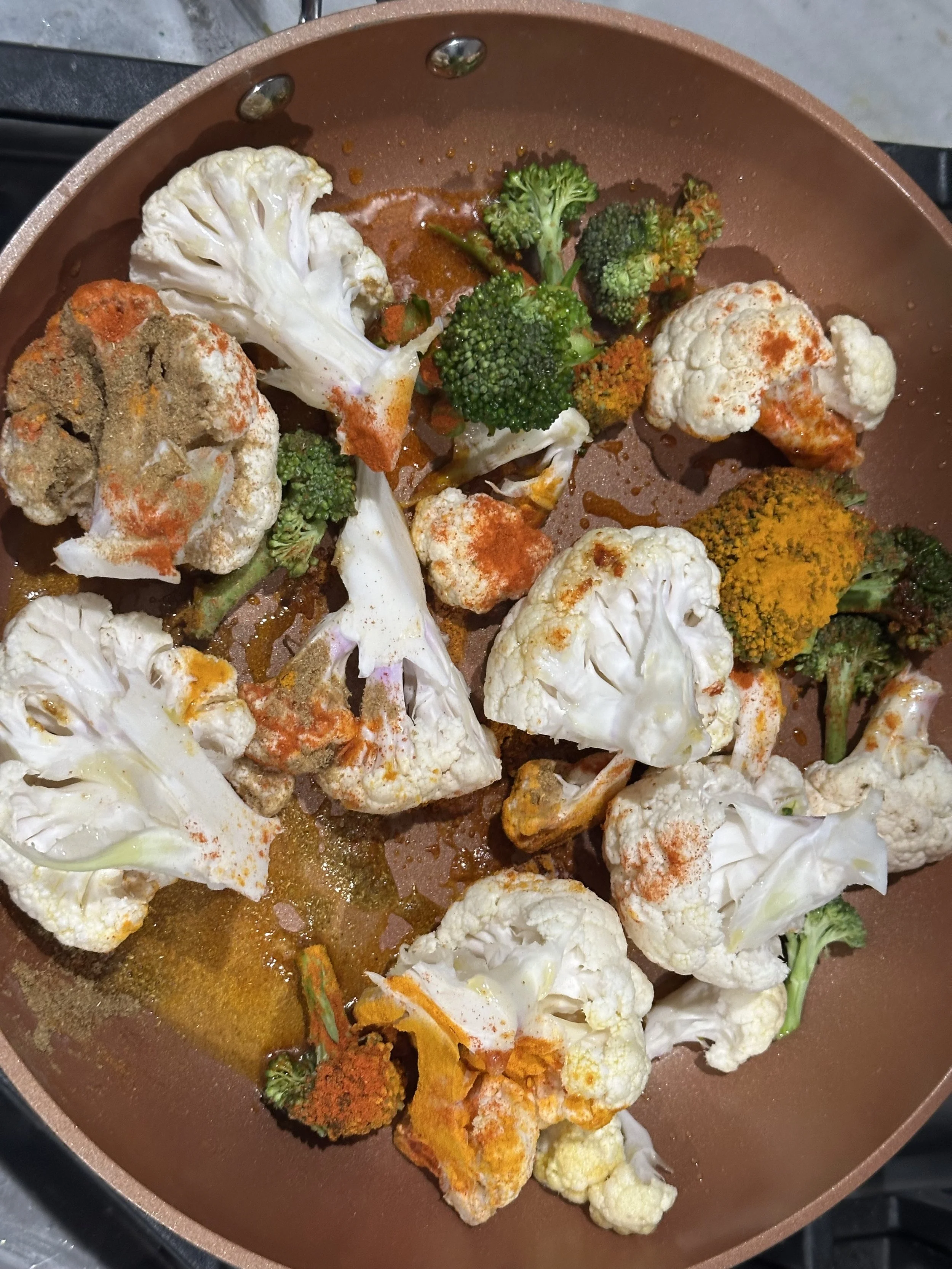
Back to the present moment as I stood alone in front of the stove, the phantom warmth of the memories enveloped me, so familiar, yet so far away. Now as I sit with my vegetables done cooking and Krisno still playing in the background, I can’t help but think on an existential level, what a weird thing time is.
As the delicious scents filled my nose, I couldn’t help but notice the absence of company that I was so accustomed to accompanying them as I stood alone in my kitchen, me being my only human company. I couldn’t help but feel the contrast of a house filled with people, or of the anticipation of it being filled with family friends, with the emptiness off a solitude, even if it is something I am normally grateful for and enjoy. The joy of living alone being one side of the pendulum, the craving of connection being on the other side. The newfound joys of being and actually feeling like an adult with the longing for my childhood and having food cooked with love and consideration by others who wanted to take care of me. Perhaps the food is also my strongest, most stable connection I still have to my South Asian, Bangladeshi roots, in contrast to the loss of Bangladeshi community and art I’ve experienced over the years since moving from a more diverse setting in Massachusetts to a predominantly white, more conservative one in Virginia since I started high school.
The aromas and sounds aren’t just simple sensory experiences— they carry attachment and grief with them. Nostalgia and meaning. Connection and loneliness.
Culture.
—
Before ninth grade, I had a deep connection to my South Asian roots. I excitedly talked to my friends and peers about being Bangladeshi and being Muslim (at the time, now I am agnostic) or I would unapologetically wear emblems of my faith. I had a deep attachment to these parts of my identity, and used to wonder how in the world some people my age or older from my background could ever be ashamed of these beautiful parts enough to hide them. I especially didn’t understand how people could want to whitewash themselves.
But when we moved to Virginia and I started ninth grade in 2012, I started to understand. And that understanding deepened as I learned that in order to fit in, I would have to hide much of these pieces of myself that I had once been proud of— especially if I wanted to be deemed “American” enough. Relatable enough to my peers. It wasn’t just about things that were said explicitly throughout my high school years that made me want to hide my desi and even my then Muslim parts, though I held more strongly to the latter since religion had an added existential and moral layer in comparison to culture; it was also about things that weren’t said. It was the loudness of rejection, a slow burn realization that white girls in my classes weren’t as open to befriending me or talking with me. And it was in the blunt ways that people in my Air Force JROTC class (yes, I was in that class— the reasoning behind that is a story for another time) made ignorant comments and jokes about Muslims— and the weird way in which my teacher at the time asked the class which ones of us in that class were Muslims, me and another student raising our hands. Prior to Trump’s campaign in 2015 going onto 2016, I didn’t fully understand conservatism and patriotism and the racist undertones beneath them— it was something I felt in my bones, but I didn’t want to assume that people around me were racist just because they were more conservative. But the self-gaslighting made way for clarity of reality when Trump’s campaign did roll around and people were unapologetically supporting him— even people I had considered “nice.” Even a teacher who had been my most favorite and really cared about all of her students. These same people were sharing pro-Trump, racist and Islamophobic posts on Facebook— it was interesting how confidently they reposted things about people they haven’t even tried getting to know better in person. Even people who had been my friends— albeit never very close ones— who were saying that they thought Trump would be good for our country.
But good for who?
I’ll have to make another blog post if I go deeper into this now, but I have a much more nuanced perspective of people’s goodness and multifacetedness. I know that no one is fully good or bad and I know that much of the time people make decisions based on the knowledge and ignorance they have at the time— without distinguishing accountability, I could also see how many of the people who were pro-Trump had good intentions rooted in brainwashing. But again with the accountability bit, it was up to them at the end of the day to have empathy— and many of them didn’t dare explore outside of the privileged bubble of their whiteness, especially when that whiteness was coupled with the existential comfort of Christian nationalism. Where they equated morality to these white supremacist lenses in perceiving divinity, where the consideration of ethics was taken but granted but the honor of having it was assumed— because at the end of the day, it was about ethics and moral consideration for some, but not all. It feels complicated to think about how the teacher I mentioned was so kind to me and other students of color, going out of her way at times to assist us in our learning, and at the same time would vote for such an abhorrent emblem of dehumanization of people who looked like us.
Anyway— my point here is that even in an environment where people may have been nice to my face and considerate of my humanity to some extent, they still saw me in a hierarchy where I was below them because of my South Asian and Muslim identities, whether they were conscious of it or not.
For example, a couple of ladies in the counseling office were always very warm and welcoming to me and let me borrow their bathroom to make wudu, or the ablution before prayer and gave me a designated room to borrow to do my prayer in and never made me feel weird or awkward about it.
Considering these factors, as time went on and the more I sensed my cultural and religious identities being looked down upon and “othered,” the more shame I internalized around them and sought to reject them. The more I started to reject these parts of myself, even if no one was watching. The more I detested going to Bengali gatherings with the Bengali and Bangladeshi communities in my area, and the more I wanted to separate traces of South Asian culture in general from myself. In ninth grade, I still carried on my love for Hindi soap operas, scurrying to online Indian websites where there would be recaps of the shows I was dying to know what happened in. The episodes aired earlier in India, so I would eagerly read the updates before actually watching the shows here in the US (or I would end up not watching the shows at all, because it was hard to make time for it). But that eagerness evaporated as my connection to my culture became thinner and thinner.
—
Even though I’m agnostic now, Islam and being a Muslim were very significant parts of my identity. Even in my agnosticism and leaving organized religion, Islam still holds positive influence over my moral and ethical compasses as well as within my conceptions of God. Throughout high school, I was disillusioned with the idea that there weren’t a lot of practicing Muslims my age. That incorrect view was shattered when I went to college and realized that there was a plethora of practicing Muslim students my age— younger and older. Many of these Muslims also shared a South Asian background with me. I was delighted to feel a sense of belonging I had been longing for throughout those high school years, and had thought were impossible. I was additionally filled with joy when I got to be in community with Muslims from several different backgrounds from my South Asian background. And I found joy beyond the Muslim Students Association too when I befriended non-Muslim, non-South Asian people who also were interested in befriending me— I felt accepted and celebrated at college, which was far diverse than my hometown and high school. People were actually interested in getting to know people both similar and different from them. Sure, I still experienced close mindedness from some people— we’re still in the United States and racism and microaggressions are still at play (among other things). But it was refreshing to see and experience that were was much more beyond the bubbles of ignorance. Being surrounded by fellow South Asian people, fellow Muslims as well as people from backgrounds significantly different from mine reignited my long forgotten, suppressed love for my culture. Where I once felt at home and was incredibly proud of.
I realize that another reason for me shunning my culture had to do with the parts of it that I resented: being expected to care too much about what other people thought, trying to impress people instead of connecting with them authentically and viewing relationships as transactional, parents pitting their kids in some made up academic competition the kids never signed up for yet were expected to be active participants in with each other, patriarchal ideologies that shunned girls and women for existing and honoring their autonomy, kids including adult children being expected to submit to their parents and being labeled as disrespectful if they didn’t, the normalcy of enmeshed family dynamics and lack of boundaries and the normalization of emotional and physical abuse. But that’s not all of what my Bangladeshi culture was.
There was also the valuing of the arts, an inspiring history and strong penchant for justice and liberation and preservation of culture, honoring of religious diversity and free thought (for the most part), yummy, flavorful food (which is what drove me to write this reflection in the first place), beautiful clothing such as sharis and lahengas, a rich language (Bengali or Bangla), a strong sense of community (the good parts of it), a thirst for knowledge and learning, the commonality of there being woman leaders.
—
Some of my best memories from my childhood were when we had just moved to Masschusetts from Texas. I had just finished second grade, my sister had finished Kindergarten. My parents drove us to Morse School in Cambridge on a Saturday, where we were to learn Bengali dances to Bengali songs for an upcoming show. We had previously done a less articulate version of the choreography for “Shundor, Shuborno” for a previous show, which my sister and I performed with my childhood friend, Samina (who I am no longer close friends with due to moving, but remember fondly). At Morse school for this other show, I would meet one of my most significant childhood best friends, Labonno. Sure, I hated actually dancing at that time, as I had body image issues and struggled with feeling safe to perceived by others in that art form— but I had loved seeing her and my other friends. I loved that we were in this together, and that we got to spend time and play pranks on each other during our breaks when we weren’t actually dancing. I missed the friendship and community aspects. Saba Aunty, our dance teacher, was at the heart of it all— she had a passion for dancing that was necessary to her almost like breathing— something she couldn’t live without. She had a kind heart and welcoming energy— something I wasn’t wise enough to appreciate enough during that age.
I envied Labonno and other Bengali friends for living close to other Bengali people, while I lived in predominantly white suburbs where I didn’t fit in as much. When I lived in Texas prior, the area I lived in, while still being predominantly white, was considerably diverse. Maybe it was part being young and innocent and not noticing or caring about people being weird towards my background, or maybe diversity was just common enough in the area that I lived in and people were generally more accepting of diversity at the time. I had friends from various backgrounds then, too. In our white Massachusetts suburbia, while still proud of my culture, I longed for more community in connection to it. I wanted friends I could be better understood by. I wanted to feel immersed in my Bangladeshi culture.
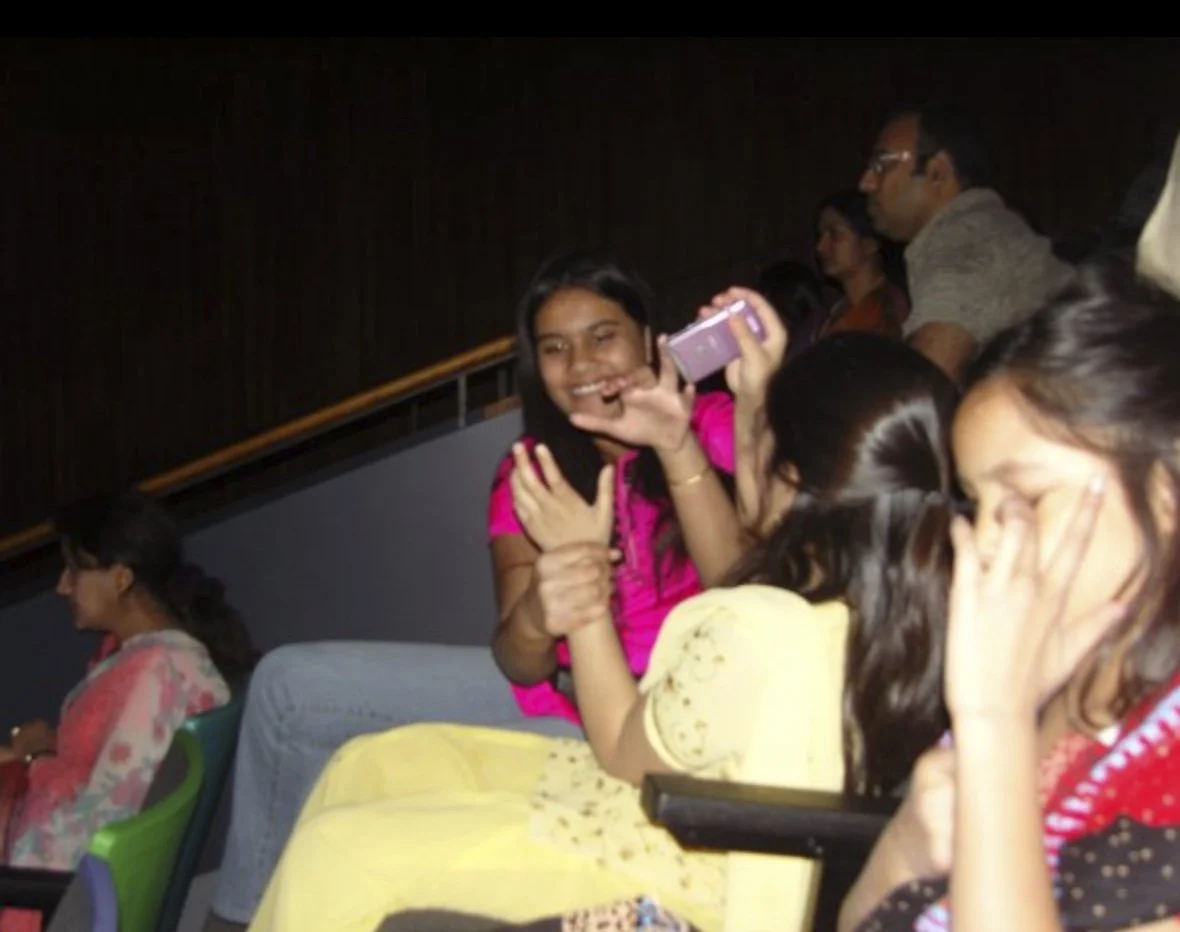
My favorite parts of those early days of living in Massachusetts was seeing Bangladeshi friends very often, too. Nearly every weekend, there would be a dawaat, or an invitation for a meal (usually dinner), at a fellow Bangladeshi family friend’s house. These memories consist of playing tag with my friends, watching Charlie the Unicorn, the Numa Numa Guy and Avril Lavigne’s music video for “Girlfriend” on YouTube— an excitingly new invention that the world was starting to get acquainted with. I remember going home late at night, driving home with my parents from New Hampshire which was where Samina and a few other Bangladeshi people lived or other times from further cities in our same state, feeling an inexplicable satisfaction going under the comforters which protected me from the New England cold chilling my sister’s room, where I routinely slept in instead of my own bed. I remember laughs in cozy bedrooms in cozy homes. Flavorful curry with rice, and getting thirds and even fourths at times. Wearing salwar kameezes, with me being particularly fond of a black and turquoise one I used to love. Straightening my hair, which was waist long (it would be awesome if I could grow it that long now). Having multiple familiar purses I would rotate. Begging my parents for five more minutes to spend time with my friends, only for there to be another half an hour spent on my parents bidding everyone goodbye at the doorstep, after our coats were put on ready to go.
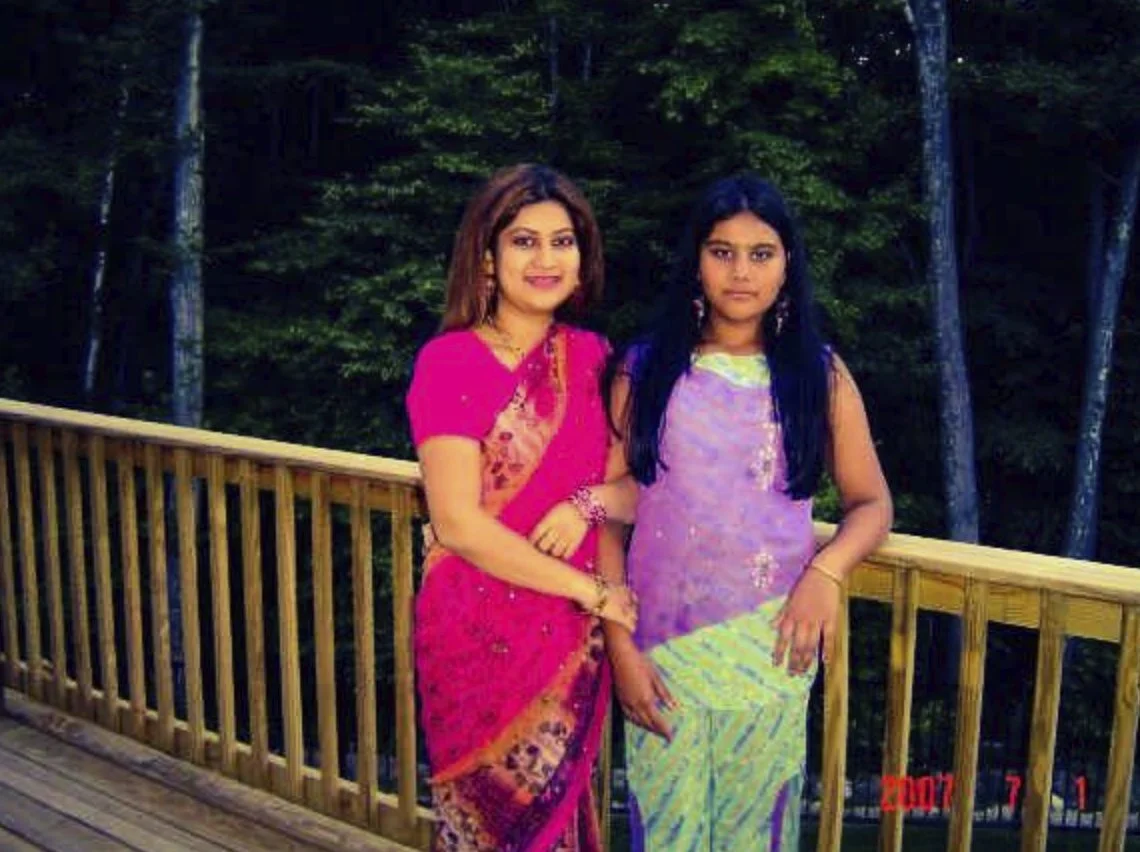
My mother and I in either 2007— I had recently surpassed her in height.
Unfortunately as I got older, the joys of dawaats evaporated. My parents instilled into me the burden of maintaining a perfect family reputation, especially as the elder sibling, and that turned into me overthinking my interactions with people and refraining from being authentic out of loyalty to my parents. I was more focused on how I was being perceived by others— and by extension, how my parents were being perceived by others-- and how I could impress people instead of connecting with them. Heck, I didn’t even realize the distinction between connecting and impressing— they were conflated, the effects of growing up with high expectations of being exceptional in my family manifesting as finding glory in disconnect. To be fair, my parents were and still are very social. They love keeping in touch with people, and take opportunities enthusiastically to commune with people. At the same time, my sister and I have been discouraged from going deeper with people. We’ve been taught that to stay safe, to maintain honor, we must walk on eggshells, not share too much about ourselves, not be too vulnerable— to filter our humanness and multifacetedness. Especially when characteristics of imperfection show. Especially when those imperfections reveal not so pretty things about the dynamics within our family, especially where they reveal imperfections of our not-so-perfect parent-child relationships.
I, like many other kids growing into adults in our communities, had internalized that loyalty to parents on an existential and moral level was contingent on how good we could make our parents look, how much we could give to their legacy through their direct associations to us through our achievements and accolades.
It also didn’t help that I was taught to be hyperconscious about my body and how it was being perceived by others, particularly by other aunties, using my mother’s lens of her own body insecurities as an expectation and standard. I reveled in the idea of getting validation from aunties who would compliment me for losing weight, and would imagine that aunties who were looking at me and smiling at me without saying a word weren’t saying anything about my body at all because they didn’t have anything nice to say about it, because perhaps they were thinking about how I hadn’t lost weight or that I hadn’t gained weight— I was in eleven years aold and in fifth grade by the way when I remember the hyperconsciousness beginning, me having read my mother’s Women’s World magazines from fourth grade, eager to find weight loss tips. I was also praised for being “mature” for my age— another source of validation from elders I reveled in and sensed my parents’ pride in and desire for.
My sister was always pretty good at making friends wherever she went. Maybe part of this had to do with an innate confidence, and maybe part of this had to do with certain burdens she didn’t carry as the younger rather than the older daughter who was expected to be mature for her age, being responsible for making sure her family’s image was intact and holding family secrets that made her grow up a bit too fast. For me growing up, more and more my maturity and “goodness” was associated with how much I didn’t express myself save for formalities with aunties and uncles and academic and career related connections that were transactional. I could only express myself if I served as a vessel of my dad’s impressive, high achieving legacy and the welcoming warmth of my mom. I have a complicated relationship with achievement now, and an even more complicated relationship with my father. My relationship with my mother is better, and I appreciate much of the social qualities she has and her ability to find beauty in things and in her love for hosting and sustaining community— though we are still significantly different in which life values are most important to us, which consequently means we have vastly different worldviews.
When we moved from Massachusetts to Virginia when I started ninth grade and my sister started seventh, as I mentioned earlier, my disconnect from my culture widened and my resentment for the flaws within it grew.
As I mentioned earlier, Bengali family friend gatherings became more about performing than connecting. More about focusing on how you and your family were being perceived than how you were getting to know other people on deeper levels. I don’t want to abandon nuance— people still did curiously get to know each other for the sake of it; at the same time, that genuine desire undoubtably carried the shadows of hypervigilance and caring too much about what other people thought.
Especially as I got older, the awareness and burden of being an ambassador for my family’s reputation in glorification of my parents, especially that of my father, became more and more present. My sister and I crushed more and more under his expectations, some silent and some loud, some scathing and critical and some deceptively sweetly sugared praises with the intent for molding and control. After being in high school, the pressures, the burdens, the expectations of being trophy daughters in the Bengali community and beyond became louder and louder. Whose kids had the best grades? Got into the better college? Would be the most successful?
My sister and I along with other family friends’ kids were enrolled in some academic and career-based competition none of us signed up for, yet were expected to be full participants in. And for the girls, we were enrolled in a beauty contest, too, on top of all of that— aunties and even some uncles and fellow girls our age comparing and contrasting who was prettier, who wasn’t. Whose makeup was perfect, and who fell short for not wearing any. Who was fat? Who was skinniest? Whose skin was forsha, or lighter than the rest— and therefore the prettiest in their lens of colorism?
And which girls were good and prayed regulalry, which girls were bad and had secret boyfriends?
—
When we lived in Massachusetts, aside from driving between our state and New Hampshire to often see fellow Bangladeshi family friends, we would frequent New York— particularly Jackson Heights, an incredibly culturally diverse neighborhood in Queens. We had a few family friends there— more precisely, people my parents knew for a while but my sister and I didn’t know as well— that we would visit may of our trips there, and we would walk around densely populated Bangladeshi areas with Bangladeshi restaurants, jewelry and clothing stores, desert shops, Islamic book shops, desi groceries, various houses and apartments and more. One of my distinct memories from when I was in third grade and we walked past a toy shop that was semi outdoors, with various electric toys on display for kids like myself to be ooh’d and ah’d by. One of my favorite toys from here was one of those fake small gum packets, where one of the sticks of gum was pulled out so that when you offered it to someone and they pulled it, it would shock them instead. I remember using it on a few uncles at that age and having fun with it. As an adult now, I would feel quite bad about using it even if it didn’t cause too much harm— getting shocked just isn’t fun, even if it’s a tiny amount.
As we continued those day trips throughout the years, with me transitioning from elementary to middle school, I couldn’t help but become increasingly aware of a desire to live in Jackson Heights, or to live in a setting somewhere similar to it. What would it be like to grow up surrounded by fellow Bangladeshis? And to have so many shops and resturauants at walkable distances? To feel so connected to peoplet, especially through the common understandings of sharing cultural and religious backgrounds? And wouldn’t it be fun to live close enough to New York City (though I absolutely did not see myself living in such a busy area at the time, but current Samantha might beg to differ). Of course, these were speculations. Regardless, still in hindsight, I crave that sense of belonging I imagine I would have gotten there. In those more densely populated areas, with close-knit neighborhood structures, you could feel the sense of community. The comfort of knowing that you could walk from your house to close friend’s, or easily go to a local restaurant for lunch. Especially being a middle schooler at that time, it would be cool to be able to go places and meet up with people without needing a car. It was a far contrast to our predominantly white suburbia, where the only sense of community I would get with other Bangladeshis would be through dawaats— which wasn’t a guarantee every weekend. It was even less of a guarantee that I would get to see my actual friends of my own age in these dawaats.
It was again different for my sister. She had less restrictions on her in making friends because of differences in personality; however, much of that personality was affected by our different experiences in the same household that we grew up in. I know a quote from trauma expert Dr. Gabor Mate who stated that different children of the same parents have different childhoods because of the different kinds of parenting and expectations that they receive. For me as the eldest daughter, I was expected to take on a more traditionally perceived masculine role at certain times, such not expressing my emotions very openly and being on the academic hustle all the time, not feeling very welcome to ask for help. I was expected to figure a lot of things out for myself, and I was expected to know things that didn’t make sense for someone my age to know. In contrast, I was also expected to fit into certain traditionally understood feminine roles; my parents confided in me privately about family affairs, whether they were secret from the other parent or from my younger sister. I was expected to help my parents manage their emotions, or tiptoe around them to avoid their emotional outbursts. If verbal outbursts were directed towards me, I was expected to forgive and forget, being shunned for wanting to talk about what happened or called too sensitive for being offended and impacted negatively by these occurrences. I was taught that connection— friendships— were a luxury, rather than a need. This led me to internalizing that connections with people-- relationships with people— were dependent upon how cool you could look to them and impress them. Of course, I want to be friends with people who I consider cool as an adult— I want to consider myself “cool” as an adult— but by standards of genuineness and being a morally, ethically conscious, creative and intellectual human beings who have sense of purpose beyond the ego. Who love to learn and connect for the sake of it, who are intentional about embodying and radiating love as a value beyond mere attachment and inspiring that sense of divinity within others. At that time, I did value authenticity, though I didn’t fully understand it. I still had a lot of maturing to do to understand what it meant to be authentic and in integrity. In alignment to perceiving myself through the minds of other people rather than through my own discretion, I was more concerned with the aesthetic of being authentic to please others than actually being authentic even though that lack of integrity was never my intention. After all, it had been ingrained into me from when I was very young and even moreso during my middle and high school years that I was to think just like my parents— especailly just like my father— did, especially if I wanted to be a morally righteous person. One of the most toxic parts of Bengali culture and many other South Asian cultures is that you must submit to your parents to be a good person, and espeically to your father, for they supposedly know what is best for you. I remember random instances of aunties and uncles, whether I knew them for a while or whether I had just met them, preaching to me to always listen to my parents to be successful, that my parents were my best friends despite knowing nothing about our family dynamics behind closed doors. There was always this reverence for elders, an assumption of entitled respect where respect was equated with authority.
Elders could never do any wrong when it came to their children or that of others, or if they did there must have always been a good and justifiable reason. For both daughters and sons, there were expectations that children, including adult children, would continue filial piety in the form of submission to patriarchal fathers. For daughters in particular, there was an added layer of submission, where you autonomy was a sense of honor on the men of your family to reflect some kind of moral goodness, but where it was still gatekept from you in the hands of these men who were still existentially attached to patrarichal norms that served them. In other words, they want you to be independent, but on their terms and as long as they still have control over your career choices and personal life choices— especially when it comes to choosing a life partner and how you choose a life partner, and having children. Very often, South Asian parents feel an entitlement to the uteruses, body and overall reproductive system of their daughters and daughters-in-laws, which is an interesting contrast to the simultaneous taboo around sexual relations and intercourse. It is as if they want to erase the existence of a woman’s sexuality to justify infantilizing treatment where they assume entitlement over the endeavors of her body. In other words, elders in a family assume ownership of an adult woman’s body, where they deny her primary ownership over to it and reduce it to how it can serve their existential goals of continuing their family’s lineage. It makes them uncomfortable to acknowledge the women’s own sexuality and her own relationship to sex, in large part due to the discomfort they have around her exercising her sexual and bodily autonomy, and overall autonomy as an adult individual. By denying her full ownership of her body and of her own sexuality, elders deny her adulthood and autonomy in accordance to patriarchal norms. This doesn’t mean that these same elders lack any care at all towards the well-beings of women in younger generations, but it does mean that said care is given from a hierarchical lens where women are inferior to men, and especially younger women are inferior to elder men. The respect for a woman’s humanity is lacking, with the acknowledgement of her autonomy being downplayed.
To give examples of contrast between our childhoods growing up, I was often scolded for mistakes that my sister made, but my sister wasn’t held accountable for my mistakes; bringing this up resulted in me being told that both sisters needed to be held accountable even if one made a mistake (which of course as an adult I know makes no sense). When I was eight years old going to nine, I was at a family friend’s birthday party. I was wearing a sleeveless pink dress with blue polka dots, and I had a cropped long sleeve cardigan on top. When I took it off for my comfort (I think it was hot or I just wanted my shoulders to breathe), my mom scolded me saying that my dad would get mad if he saw that (which I don’t know for sure if he would, but I wouldn’t be surprised if he did). My sister on the other hand never had the same problems. I had accepted this double standard, assuming that it was because I was older that my body was more mature than my sister’s and thus in need of modesty, and that surely my sister at my age would have the same expectations of covering put onto her. when I was eight years old with this initial incident, my sister was six. But lo and behold— when my sister was in sixth grade, it was still normal for her to wear shorts and miniskirts that were compliant with our middle school uniform at the charter school we went to, meanwhile I was still wearing things past my knee. To be fair, my parents probably wouldn’t have cared if I wore cargo shorts or longer almost knee-length shorts; after wearing a mini skirt over my swimsuit one day in the summer before fifth grade, I felt incredibly guilty even though my parents hadn’t fussed over it. Out of guilt, I promised Allah that I wouldn’t show my knees anymore. I didn’t stick perfectly to this boundary, but took it more seriously as I got older. But of course after I became agnostic, it didn’t matter to me much anymore since I didn’t have a morally binding religious reason to show less skin— even if I still maintain certain standards of modesty for my own personal privacy, boundaries and comfort.
Regarding sexuality and purity culture again, I watched my peers around me have boyfriends and girlfriends, go on dates, get asked out on dates while there was this sold instillation in me that I was not allowed to date. At first, it didn’t bother me much— I had strong religious conviction as a freshman, even if it felt weird to me to witness people my age being allowed to do things that I wasn’t allowed to do. But as I went higher up in my grade level, the more otherness I felt— it wasn’t just about the fear of missing out (aka, “FOMO”) but it was about feeling a significant sense of separation from those around me. One of many reasons I felt like I couldn’t belong.
I wouldn’t say it was toxic to not be allowed to date through high school, especially not in the earlier years of it— it’s valid to want your kids to prioritize their education over dating and romance and sex. At the same time, it’s a problem to disregard your sexuality and to be gaslit out of it; for your parents to infantilize you, to have you suppress your maturation in ways that make them comfortable while simultaneously defining you as “mature” and “good” and “loyal” to them based on how much you stay silent and disconnect from yourself. And when it came to having friends, my parents never outright told me I wasn’t allowed to have friends; in fact, they sometimes voiced worry about my potential loneliness. At the same time, they seemed to glorify and expect my separation from others, me sensing their approval for staying at home rather than going outside, telling me that I shouldn’t be going to prom because it’s “not a part of our culture” even if I were to go with friends, expecting me to be that personable trophy daughter envied by their friends in the Bengali community while also discouraging me from being away from my studies and chastising me for engaging in non-academic hobbies. They wanted me to have a sense of self rooted in them— a contradiction of itself. They wanted me to be someone who could be showed off to both desi friends and non-desi American friends including white American family friends they had, but at the same time didn’t want me to be too American while appearing all-American to their white American friends. They wanted to present me as educated and cultured, a pious good girl to their Bengali friends while making sure I wasn’t showing too much leg in front of them depending on how conservative they were, even if my dress went beneath my knees because it didn’t go all the way down to my ankle. They wanted me to be that good Muslim girl, but to tone down my Muslimness in front of those non-Muslim white American friends. I was always expected to play the role of belonging while being on the sidelines.
—
Earlier this year, at the end of January, my sister was expressing anxiety about multiple deaths the month held— including that of Izzy, who was our first family cat, my sister’s cat really though loved and cherished by us all. We had to put her down last year. She was already grieving and dreading another death that had just occurred, one of the grandpas from our Bengali community in Virginia passing— only to text me in disbelief and grief that transferred to me that Saba Aunty had just passed away unexpectedly, too. Apparently she had been sick for a long time prior to her sudden death.
—
I remember some of the shows we did with Saba Aunty’s guidance was for Ekushey Febraury (21st of February) which is International Mother Language Day, and some others that were done for Pahela Boishakh, or Bengali New Year. I knew it was important on a cognitive level when I was a kid, but as an adult I have a deeper understanding of its significance and am reflecting on it more as I understand more the value and significance of culture on the human experience and human identity. I understand it even better now within the context of my own evolved appreciation of culture, art and humanity. One of my memories for one of or both of these holidays is when we incorporated our dances into an overall play in a few different dance events— I was assigned to play the role of a bride in a couple of these, which I was not happy about and got teased relentlessly by my friends about. After the completion of a joyful dance number, suddenly the stage went dark and sounds of bombings from a speaker went off, and fellow performers and I ran to and fro shouting each other’s names in distress, trying to figure out where we all went to reenact the tragic events our ancestors had to experience at the hands of the Pakistani government.
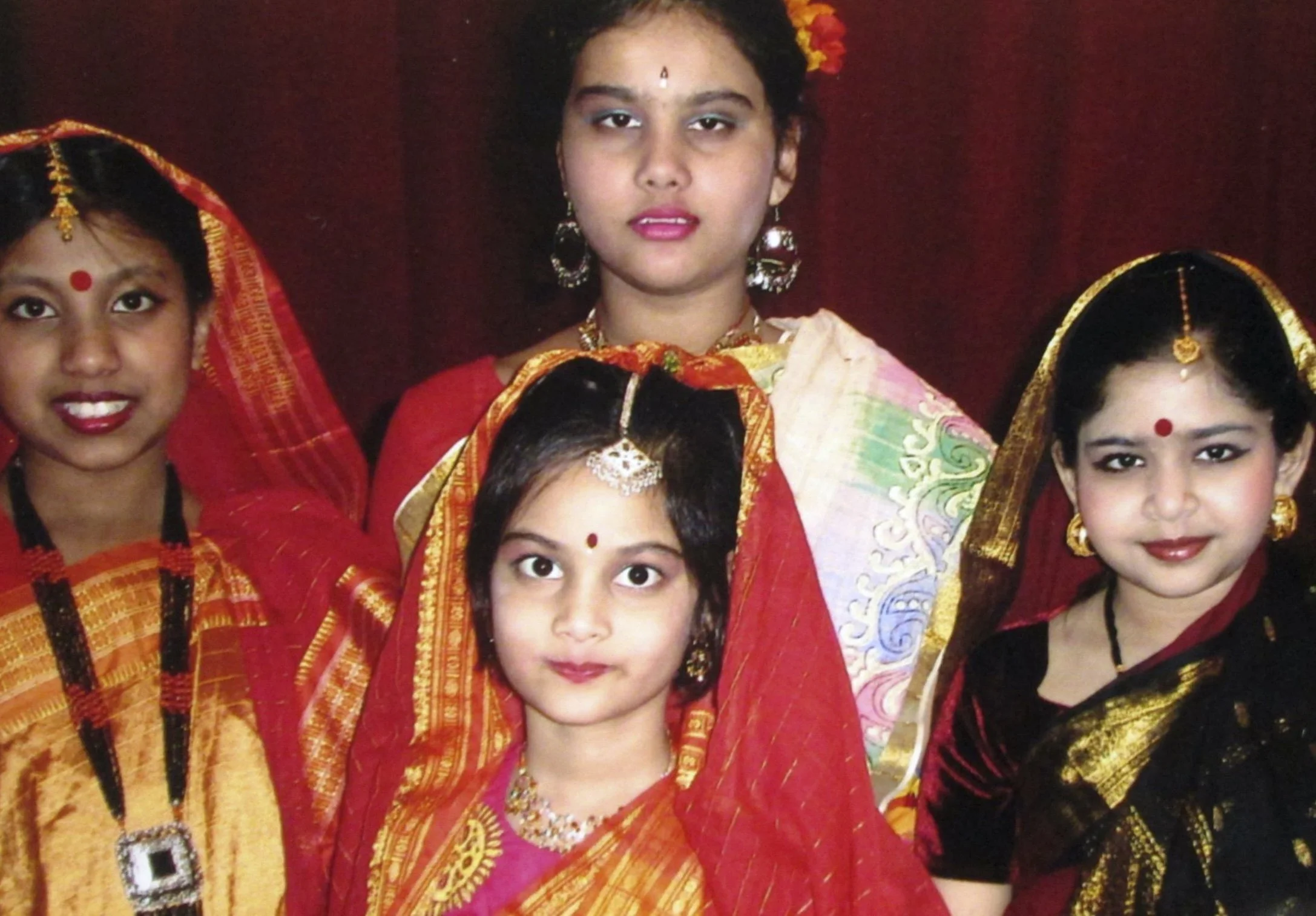
I am in the middle top, my sister is in the middle bottom— this photo is from 2006.
Ekushey February on a global level calls for and celebrates diversity among people around the world, and with its specific reigional significance was borne out of Bengali resistance to Pakistan’s attempted erasure of the Banga langauge, which of course is central to Bangla culture as language is an undeniably embedded characteristic of people and their cultures. Several Bengali people died at the hands of Pakistani police who sought to shut down protests and rebellion to the then Pakistani government’s attempts to marginalize Bengali people. I do want to make sure to acknowledge that this day is important for all Bengali people, whether they are from Bangladesh or India. Last week a video from Bideshi, a TikTok account dedicated to spreading information about and celebrating Bengali and South Asian culture and history (their website is Bideshi.co and their TikTok handle is bideshi.co and Instagram handle is the.bideshi, I highly recommend their platform) came up on my feed where there was footage of Pakistani soldiers rounding up and fatally shooting multiple Bengali university students. That broke my heart and reminded me of why it’s so important to stay recognize these holidays, history and stay rooted in our cultural identities while uplifting, learning about and celebrating the cultural identities and diversities across humanity.
-
Over the past few months, I’ve been finding a lot of comfort in watching Mohuya Khan’s vlogs on YouTube, often leaving them on in the background as I eat and do chores. She is in her mid to late twenties and a Bangladeshi-American content creator, entrepreneur and artist of many forms— including through painting and making her own clothing with desi cultural elements in it. She is based in New York City. I’ve especially been in love with her vlogs because they remind me of parts that I have long forgotten or suppressed within myself. And parts of myself that I’ve been shamed out of. I admire her for many reasons, including her work ethic and independence in addition to her creativity and connection to and celebration of her roots— and I am especially grateful to her for helping me reconnect to my Bangladeshi roots in positive ways that don’t require me erasing, altering or shrinking myself. She is so relatable in how she fends off external judgment and criticism of her online presence by having strong boundaries with people in her extended family who aren’t supportive of her, and in how she prioritizes authenticity, self expression, women empowerment and balancing independence with community. I’m always inspired by how she prioritizes what is most important to her and how she makes time for the things and people that bring her joy, not letting eldest daughter or hustle culture guilt deter her. I remember her mentioning how for her living space, she cared more about having sentimental items that made her happy over having a strict adherence to a certain aesthetic— something I realized I often prefer and have even been laughed at for, but now have words for and feel less alone in and validated in. I love how her vlogs and overall online presence reminds me that, without developing too much of a parasocial relationship, that there are people out there who are similar to me whether sharing similarities in culture or values or both, and that my individual stories matter not just to me, but to other people where they can also feel empowered to find and remember themselves. I believe she’s a year or two younger than me, but I’ve benefitted so much from her sharing of her experiences and wisdom like I may have someone older and wiser, such as if I had a big sister figure in my life.
If anyone else is curious about exploring her creations and art, you can find her via the handle @labyrinthave on Instagram and Tiktok, and you can check out her vlogs on https://www.youtube.com/@mohuyakhan/videos. In addition, her and her husband, also Bangladeshi American, have a podcast called Difficultish that I highly recommend.
—
In college, I majored in Religion & Culture as my primary major and in Political Science as my second, much to the chagrin of my parents. I went in as a Biology major, and then switched to Business Information technology before finally giving myself permission to pursue an education that I truly wanted. I had planned of becoming a lawyer or perhaps a college professor— a dream I still have, but not sure if I will end up pursuing. I chose my primary major because I was intrigued about humanity and our differences, and wanted to consider our collective existence in an existential context. It fascinated me to think about how we have different worldviews about life and how it’s supposed to work, about death and what happens after we die, or if anything happens after we die. It was so interesting to me to ponder how different people had different faiths and cultural norms and traditions, and how that affected their perceptions of life. I wanted to learn more about that, and I thought it would be incredibly cool to explore that on a level as deep as a college degree.
And I still have that existential wonder. When it comes to my own cultural background and religious and spiritual journeys, I am in deeper awe especially now even as my interest in my own roots ebbs and flows, even as I experience an ebb and flow of anxious and avoidant attachments towards it, the good and the bad, the overall existential and what it says for my identity and overall existence.
After I heard about Saba Aunty’s death, I pondered how her legacy transcends space and time, the presence of her dancing existing in liminal spaces between the lines of the the physical aspects of life an unforgettable visual in my mind, and among the burning desires of being rooted in my Bengali parts. I pondered how that energy, the essence of her, is inexplicably embedded within the lives of other former students and the organizations she played a significant role in— I think about how strange it is that a person’s significance and preswnce, and overall existence, continues to live on even after that person’s death. I’m reflecting now on how despite the feelings of irritation at having to dance for my parents’ desires while being disociated from my body much of the time in my childhood, I am grateful for and cherish the spiritual, trasncendent connections to Bengali and South Asian culture as an adult becuase of Saba Aunty’s importance and impact— even if that appreciation was not meant for elementary and middle school Samantha, it was certainly meant for adult 28 year old Samantha. Even if high school Samantha wanted to desperately whitewash herself to fit in, the memories of eating biryani from Sagar Resturant from Jackson heights deep freezed in our Massachusetts home for sehri, or the pre-dawn meal before Ramadan fasts in eight grade, still hold a special part in my heart, resulting in bittersweet nostalgia. Even if agnostic, ex-Muslim Samantha hasn’t prayed salah or fasted in five plus years and still doesn’t plan to.
I don’t want to keep the parts of my culture that commodify people as trophies for their parents, normalize enmeshed family dynamics and antagonize people for standing up for themselves and having boundaries, use gossip and putting people down as entertainment, that objectify women and give men excuses for being patriarchal creeps and where women place each other on heirarchies based on superficial things and problematic things where they also pander to the patriarchy. But I do want to keep the special parts, the wholesome parts. The beautiful parts.
I want to continue being inspired from the genuine, wholesome and spiritual parts that make me more of a beautiful human— the ones that are aligned with learning for the sake of expanding knowledge and wisdom and being good to others, and not just to show off on paper to impress and dominate other people on some hierarchy some patriarchal men made up and that colonization validated. The parts that promote community and acceptance and celebration of differences through religious and other kinds of diversity. The appreciation for beauty as a means of self expression and story telling and taking up space rather than for competition and domination, lifting others up and inspiring them through fashion and painting and writing rather than trying to outdo them. The promotion of the idea that we all are worthy of existing and taking up space and don’t have to prove ourselves to be the priceless humans we are. The parts of us that are collaborative and community oriented not as a means of erasure of individuals, but as a means of connection and individual and collective empowerment and inspiration. The parts that are stubbornly rooted in justice and freedom for all— that encourage and celebrate religious diversity instead of seeking to homogenize religious beliefs and create domination and hierarchies of one religion over others.
Last year in 2025, protests and violence erupted against the Bangaldeshi government which sough to implement quota systems for employment which places barriers for job and ultimately financial security. Essentially, Bangladeshis whose ancestors were Freedom Fighters in 1971 were entitled to employment for several jobs based on the fact that they were descendants of these fighters. When Sheikh Hasina, the Prime Minister at the time, publicly condemned peaceful protestors against this quota system, greater measures of violence ensued against protestors from government officials such as policemen. Then, mass uprisings continued to accumulate. Hasina eventually left the country and Muhummad Yunus was temporarily appointed as a leader, particularly as the Chief Adviser in lieu of Hasina. I’m awed by these Bangladeshis’ commitment to justice and freedom, as they continued the legacies for freedom and justice of their ancestors from the past. I want to continue this legacy of justice as I continue lifelong learning about humanity inside and outside of the classroom, as I read books on history and sociology and on advocacy for intersectional feminist, anti-racism and other topics around human rights and as I talk about them with people close to me and in the videos I write online and in the essays I write. In the ways in which I preserve my own humanness and humanity through the art I write, draw and film, encouraging the expressions of humanity from others.
In addition to this commitment of justice, there is of course the yummy food. And the saris and the ghagras or lahengas, the rikshaw art, nakshi katha (designs that talk) on garments and purses, and more.
The warmth of my roots and the memories that made me and the people that shape me remain, as I evolve from them in acceptances of many parts and in rejection of some others. I was reminded of that I stood in my kitchen playing “Krishno” and as I watch Mohuya Khan’s vlogs, as I create, smell and eat my own renditions of the food made by different women from my family and from that of different family friends, of ancestors from my lineage I’ve never gotten to know.