The Expectation of Being Present, Yet Invisible
There’s that popular concept of being surrounded by a sea of people, yet feeling lonely.
That’s how I felt much of my life; and in the current state of my healing journey where, where I’ve been consistently getting therapy after five years of taking a break, I’ve been coming across this theme a lot.
Stemming from my childhood, I’ve become far acquainted with my presence being expected– valued, even. At the same time, these expectations came with me not taking up space.
I was often a comfortable presence for others– those others being my parents and sister. At the very least, an appreciated extension of my parents. I was noticed and desired by my parents and aunties and uncles at Bengali family friend functions– again, often at the very least as an extension of my parents, a piece of a picture perfect family with a high reputation. My parents, unconsciously, expected their excitement and joy for family trips or those same family friend functions to extend to myself. As per cultural expectations, if I didn’t share their feelings and experience and dared to be authentic on my own, let alone express my discomfort or preference for something else, I was often labeled as ungrateful, too sensitive, both– something along those lines.
Directly and indirectly, I had internalized that I was both too much yet not enough at the same time. Because I wasn't enough in the first place, me taking up space with my needs and self expression, being honest about my feelings especially when they inconvenienced others, was too much. My taking up space was undeserved; being seen and heard, especially when it considered my own experience that didn’t require the domination of others, those others being my parents and other elders, was something I was not simply worthy of.
Being seen and heard, existing genuinely, openly, unapologetically, of course with consideration of others– was something that I had to earn through performance and pandering to impress rather than to connect. Or so I was taught.
Simultaneously, I was taught that I must see and hear and be considerate of others. Again, in my own experience, for the sake of my own reputation but especially in the preservation of that of my parents and my family as a whole, I was expected to center external perceptions of myself.
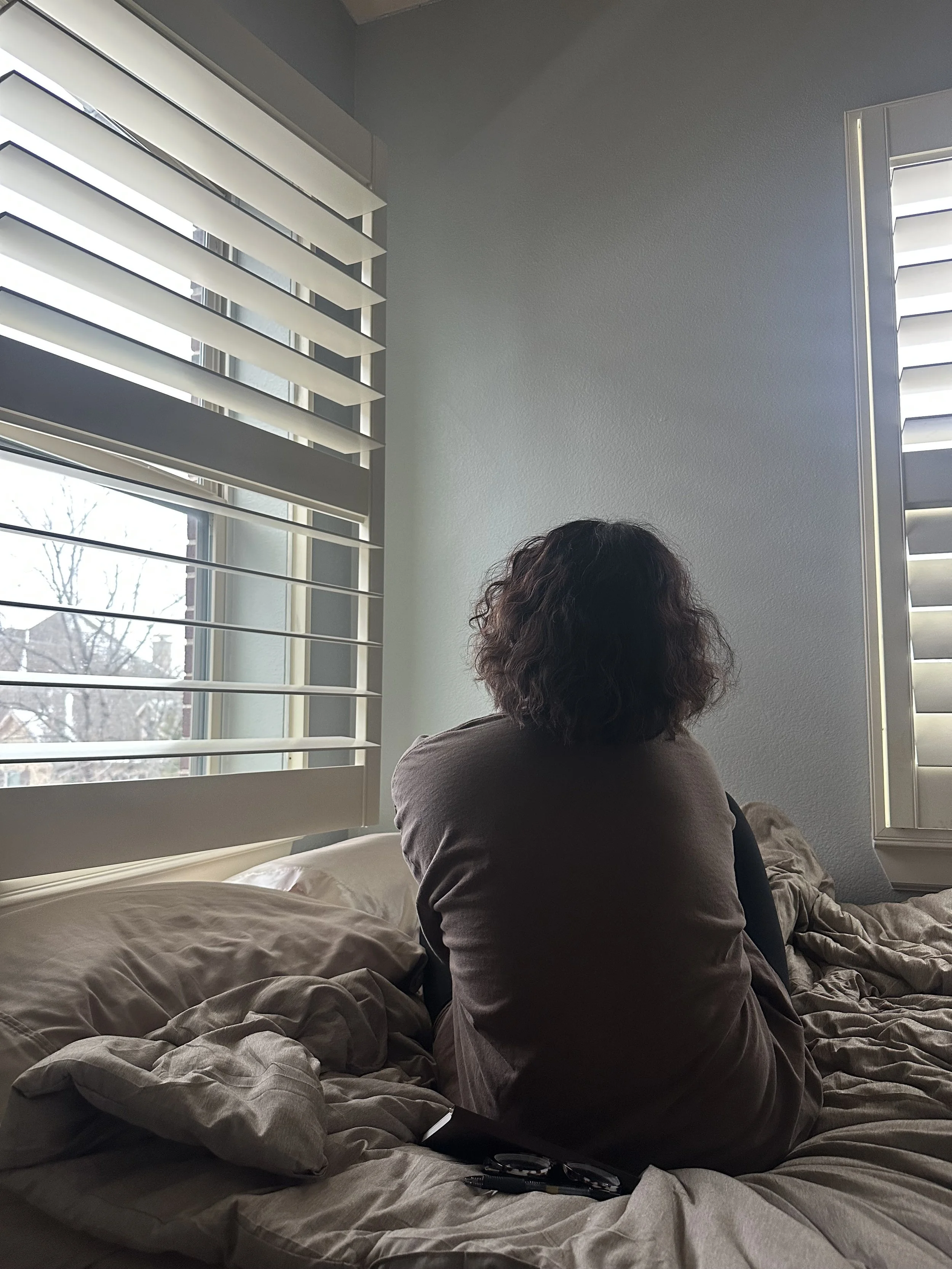
Like many cultures and backgrounds, children are expected to be seen but not heard. And into adulthood, adult children of elders within a community are still taught to bow down before their elders. Younger generations are expected to go as far as to shrink themselves and allow disrespect in the name of honoring and respecting elders, even if elders are disrespecting them.
And I want to give a disclaimer that filial piety or general respect and honor towards the elderly is not a bad thing– in fact, I proudly have an extra air of consideration for the elderly. My problem is when this kind of love, care, respect and honor for someone who is older is expected to be proven by a lack of consideration of one’s own needs.
Respect for others shouldn’t come from a disrespect towards yourself. Rather, valuing humanity as a value bigger than yourself– where you are part of that equation– is where you should move from when talking about respect.
Even in self sacrifice, you shouldn’t be dishonoring yourself.
When you give up a seat for an elderly person or when you sacrifice your safety to protest for a group of marginalized people because those actions align with your humanity, you aren’t doing so because you don’t value yourself– at least not where you have a strong sense of self worth. You are doing so because you believe you are worthy of such honorable things as caring for others, because you see them as human and therefore valuable, and your distaste for inconsideration and injustice are resultant from the humanity you have that you align yourself with.
But when you are expected to give up a seat or room for someone older than you when they have their own (assuming that they don’t have any health issues or difficulties and aren’t elderly) simply because they prefer your place, there is a double standard that puts value on their humanity over your own. Similarly, when young adults’ voices and opinions are ignored by their parents and other elders in lieu of the latter being given more consideration on the virtue of them being elders, that is inherently disrespectful to the humanity of the younger people. It communicates that the feelings, experiences, ideas and needs of the younger people do not matter, and shows an entitlement of arrogance from the elders.
I was born and raised in the United States, and my parents and ancestors are from Bangladesh. There are several aspects to my Bangladeshi culture that I love– we have a rich culture of arts, dancing, amazing food, and a strong sense of social justice. There is also often a strong sense of community among Bangladeshis. I want to acknowledge these while I go into toxic and often traumatic generational patterns coming from my culture.
As I’ve mentioned, younger generations are very often expected to defer taking up space to older generations. Disagreement is often equated with disrespect; for example, when I had told my father that I did not agree with his worldviews on a STEM career being the only secure path for me as an adult, I was berated for being arrogant and childish even though I was an older teenager at the time (and this continued into my my twenties, though the situation is drastically better now). Children, whether actual children or adult children, are treated as emotional punching bags (and unfortunately often physical ones) for adult parents, while being shunned for expressing emotional distress and needs of their own. It isn’t uncommon for the former to be parentified, while being shunned for expressing their needs as children themselves to their actual parents. As a result, it’s communicated that the parents’-- or elders’-- feelings, needs and experiences matter while the children’s or younger people’s do not matter as much. The needs of the elders are valid, while those of the youngers are not. There is more nuance to this when you consider the eldest sibling stereotype– the eldest child is parentified often by their parents, while also expecting to serve as somewhat of a parental figure to younger siblings. Both both elders and youngers, the eldest sibling is expected to shrink themselves by downplaying their needs and taking on roles that bite away at their healthy development from both ways, with the elders of course being the responsible party here for causing such a dynamic. This isn’t to say that this is always the case for the eldest child, and that parentification can’t happen for the middle or youngest child. There is more nuance to be considered that will not be addressed in this essay but I want to encourage further thinking about.
Being raised this way teaches you that in order to be accepted and valued, you must make yourself known by how much you can show up for others simultaneously while neglecting yourself to be considered “good”-- a good boy, good girl, good kid and ultimately, good person. It’s as if being easy to be around, or rather by being convenient to be around, determines how pleasant you are to be around.
In other words, you are taught that shrinking yourself and catering to the needs and whims of others makes you desirable.
How attuned can you be to other people’s needs to make them feel good?
How much can you make yourself small to make room for others? How much can you dim your light to let other people shine? As if there isn’t room or possibility for mutual consideration, because you were taught that only one person gets to be worthy of respect and honor, as if those are scarce and up for competition. How much can you be the bigger person and refrain from standing up for yourself so that you don’t stoop to the level of others harming you? Yet, the people disrespecting and harming you are given unconditional respect.
There is also a heavy emphasis on caring about what other people think of you in Bangladeshi culture, and is not uncommon from other South Asian or Desi cultures.
When we are taught to individualize these dynamics growing up– being seen, being valued, but not heard– we ultimately believe that our authentic selves, requiring our voices and authentic self expression– are not valued. At least, this was heavily my experience.
I found a sense of satisfaction and humble pride in being there for others, where I was a safe space for them. Where I told to hold other people’s emotions and experiences, and encourage their confidence. I loved helping other people feel seen and heard. Maybe a great desire for that came from my own experience of not being seen and heard, empathizing with that feeling and the loneliness that came with it, and wanting to make sure others didn’t feel that way.
And I still love this part of myself. At the same time, a more mature version of myself demands that I honor my needs and desires to be seen and heard, too– not just in the ways in which I can show up and be of value for others from where I give from my love for them, but also in more ways than that.
Ways where my own identity is established and perceived. Where my value isn’t only reduced to how I can be of service to others, where I’m not just seen as a source for taking from. But also where my value is found in who I am beyond that.
I don’t just want to be valued for my convenience towards others.
I want to be honored for my service to others, as a facet of who I am as a whole.
I want be loved as a whole person, with her uniqueness, her own vulnerability and multifaceted humanness. Someone who has dreams and desires of her own, for self-serving reasons alongside selfless reasons. Someone who isn’t expected to erase parts of those self-serving parts in order to be valued. And someone who doesn’t have to be selfish in order to be magnetic and desirable. I want people in my intimate relationships to care about my stories and perceptions and my interests and hobbies. I want them to love the open parts of me as well as the mysteries of me. I want them to care about my creativity and art and intellectual ideas and works.
I want to be seen and heard and perceived in my authenticity, and to be surrounded by people who want to truly see and hear me because I am of genuine interest to them, too.
I want mutuality.
I want these kinds of intimate, reciprocated relationships that at the same time are not reduced to transactions, because there is a two-way street valuing each other’s souls.
Because there is an actual connection.
It is hard, if not impossible, to have deep connections with others when you are disconnected from yourself.
How do you show parts of yourself to others when you are dedicated to hiding them out of shame and fear of rejection? How do you understand what it is you are seeking in alignment to your values when you discourage yourself from actually getting to know yourself to understand what those values are in the first place?
When you were conditioned to adopt your elders’ values at the risk of being rejected if you challenged them in lieu of your own, you have already disconnected from yourself, prepared to perform to be accepted by people who only accept you for your performance, and not the reality of you.
And even if you are connected to yourself, it is unrealistic to extend a reciprocal connection with another when that effort is one-sided.
The truth also is that we cannot find ourselves and connect to ourselves solely through individual connection and efforts– we must find ourselves through other people in addition to our individual self awareness and self knowing.
There are parts of our individual selves scattered among others, existing to be found in our exploration of the external guided by the knowings of our internal, that internal craving to expand in the mingling of external knowledge and experiences.
When we show ourselves to be found by others, we also hold space better where we can relate with them compared to if we had kept those parts hidden away.
We must see, hear and perceive just as we must be seen, heard and perceived.
We are worthy of being seen, heard, perceived, accepted and celebrated for our authentic selves.
We become deserving of these when we extend these to other people.
True connection can only happen when the facades of conformity and performances to perform are dropped, whether we are showing ourselves to only the individual self, to another individual or to multiple people. We can challenge the narratives of prioritizing superficial acceptance over genuine acceptance and celebration, even if that entails rejection.
Performing does not have to be our norm.
In my own journey, before I knew that connection what ultimately what I was seeking, I initially strived to find my authenticity– whatever that seemed to mean to my older teenage self.
The first step for that came with admitting that I did not want to be a doctor– perhaps I wanted a more creative route for my career. Soon after it came with me vocalizing my disagreement with the ideas that having the biggest house, the fattest paycheck, how much I could impress other people with my achievements and credentials– were the ultimate markers of success. I celebrate and admire people who have gone to Ivy Leagues or currently are in them or other globally top ranked schools, or are in demanding careers that require high grit and intelligence, even if they are not for me; their work ethic and commitment to their values often inspires me. At the same time, I acknowledge that these are not the ultimate, and certainly not the only, routes to success. It’s not just about what is on paper, it’s about what is deeper– the meaning, the why’s, the purpose in the context of an ecological greater good behind these. Going further and further into my adulthood from this timeline that began when I was around 17 years old, now at 28 years old it means prioritizing my creativity and relationships with others instead of viewing them as secondary or as luxuries. It means prioritizing people over profit, and not centering my career in my identity, even if I am doing something I am passionate about and it ends up playing a significant role in my lie. It’s about, again, connecting the most important parts of what I do to a greater value on an existential level, and not just on paper for communicating how impressive I can be to others. For example, if I end up being a university professor in sociology or a fiction book author, I will be very proud of those roles, two dreams I have. At the same time, it is not the status of those roles, at least from a capitalistic lens, that give those value and meaning to me. It is about the purpose I get to live out through them and the impact I get to make on a greater level, in ways that serve me and others. I get to promote lifelong learning in a topic that lights me up as a professor, and I get to spread the joy of beautiful settings, friendships, fantasy elements and romance as an author, in these hypothetical, but hopefully real, dream scenarios that I have.
In other words, true connection, the deepest, most soul deep kind, can only happen when there is that deeper existential awareness and meaning tied to them that transcends the individual self and the ego. At the same time, it is considerate of the individual self and what is important to it. There is an overarching ecological context.
The older I get, the more I learn and mature, the more I see how this is true.
My identity as an individual matters in the context of humanity as a whole, and it is important that I do neither erase my individual identity or shrink it to find my place here in order to honor it, nor that I neglect the importance of what and who are outside of myself in how they make up my individual self.
As I said, being perceived and honored is a two way street when it comes to making things meaningful and worthwhile.
