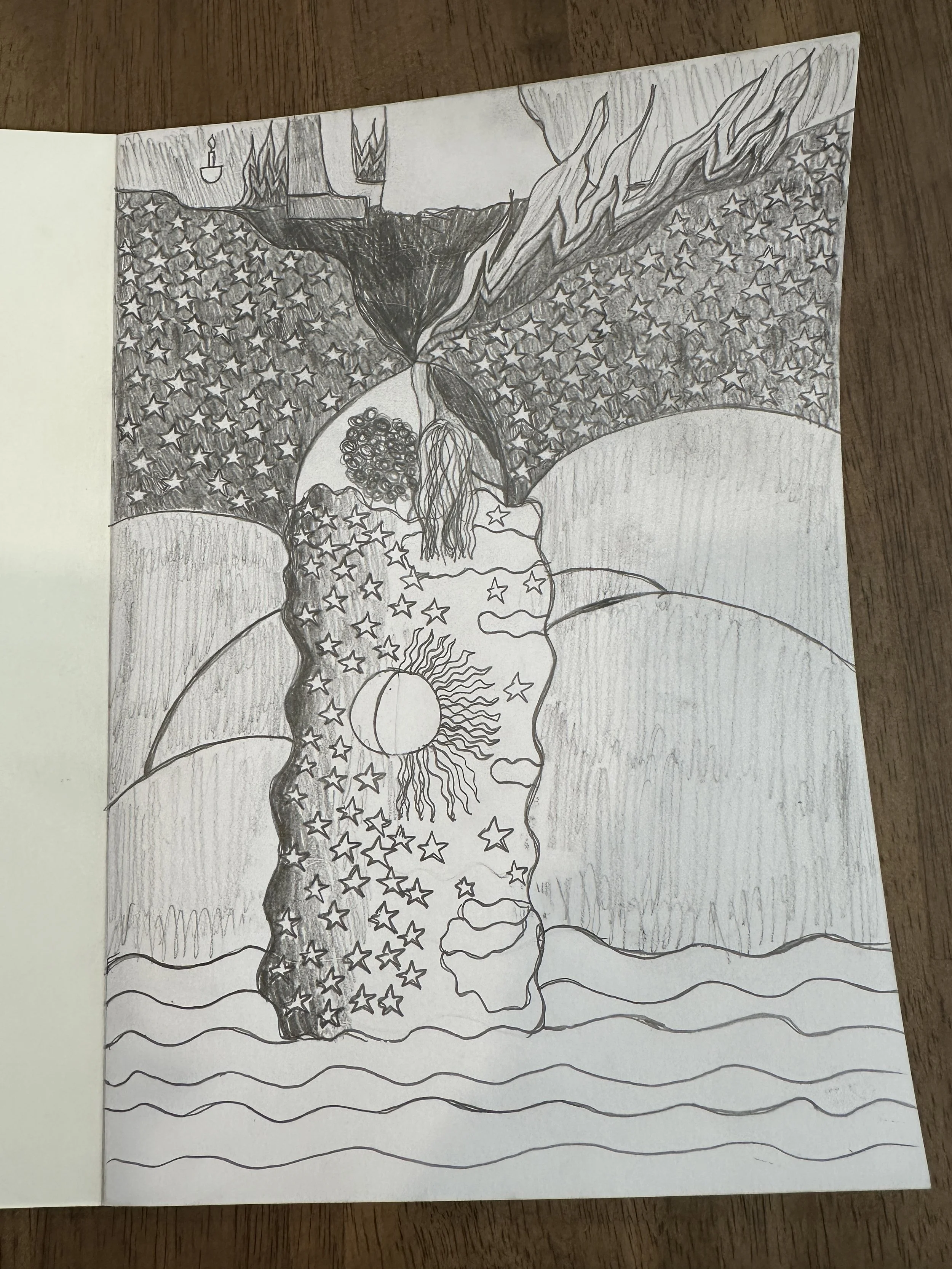
I’m almost 29 and still waiting to have sex - reflections on romantic & sexual desire
As someone who has never had sex and is going to turn 29 next month, I say that sex is sacred. Not that it has to be sacred to everyone, but to me I value it as something sacred. Because I value my sexuality as sacred— and for sex to be a connecting act. I want my partner to find me physically attractive, of course, as I want to find them physically attractive. At the same time, I want sex to be a means for us to connect to each other in a transcendent way where the act goes beyond physical looks and physical attraction. I want sex to be perceived as a portal of connecting to and experiencing each other’s souls in a deeply intimate, even spiritual way. I want to be deeply emotionally attracted to my partner, and for him to be deeply emotionally attracted to me. I want our perceptions of each other’s physical beauty to be through a lens of which we perceive the physical to be a manifestation of our inner beauty— even if we do find each other physically attractive on the surface level.
And I know I’ve been guilty of this myself: one of my pet peeves is when someone voices that they are craving a romantic including sexual partnership, where they want to find the mutually monogamous life partner and love of their life and the person they are sharing it with, while being well meaning, if not simultaneously condescending, hits them with “oh, you just have to love yourself more” or something along the lines of “work on yourself and being whole in yourself.” With these responses, it’s assumed that the person expressing they want a romantic partnership isn’t already whole within themselves or that they are automatically seeking a codependent dynamic. Yes, it’s true that there are many times where people do seek romantic relationships from a place of escaping themselves where they still have a shaky sense of self. But it’s unfair to assume that the desire itself to have a romantic relationship is inherently tied to that. Also, there is the lack of acknowledgment of the sexual desires and needs of someone like myself who needs a committed romantic relationship to not just feel safe to have sex, but also would have the best chance of pleasure in that dynamic.
I remember being in seventh grade and feeling hormonal angst where I was craving romantic connection. I tried to ease myself, telling myself that in just ten more years, I will finally be able to experience romance through a marriage. I was a practicing Muslim at the time, and I assumed that I would be getting an arranged marriage hopefully to a man that I was friends with first. I knew that I was only a tween at the time, and that perhaps ten years was more of an underestimate than the actual timeline I would get married— but it helped to think that I would be married closer to 20 than later. Little did I know that with my 29th birthday coming up, I am agnostic and I am single.
And while I am hopeful about having a romantic partnership that is meant to last with mutual effort, I am simultaneously faced with hopelessness— though I am glad to say that the hopeful part wins over most of the time.
In a way, I’ve been punked from my childhood. With religious and cultural conditioning, I had internalized that if I was obedient enough to God and my parents in terms of not dating the haram way even while my peers around me were able to enjoy those experiences, giving me yet another of many reasons that I didn’t quite feel like I belonged amongst people in middle and high school, and if I just had lots of faith in God, I would easily end up with a good Muslim man in a happy, healthy marriage. I didn’t anticipate it being so much harder than I had initially imagined. And as a non-religious person now who believes in God most of the time and still knows that even if the process of dating intentionally or experiencing catching feelings for men I knew in platonic contexts where they weren’t reciprocated, I know what a lie all that really was in my “good girl” conditioning.
Going back to the annoying responses of “you’ve got to love yourself more” where it’s assumed the seeker of lasting romantic love is simply desperate to get validation through partnership due to a lack of self esteem, there is also the desire and need for sex. In my case, as well as others who resonate, sex cannot simply be sought through casual relationships. At least, not the kind of good sex that I want. Not the kind of mutually mind-blowing, spiritually connecting sex where it is an experience of truly seeing and being seen by another person where there is a celebration of connection— intimacy and closeness— that goes beyond the physical.
Where there is depth and meaning.
Casual sex is not good enough for me because I desire and need commitment— but of course, that commitment can’t just come from anyone. It has to come from someone where there is the standard of life partnership established, with values of romantic and sexual sacredness and deep trust, love and where there is incredibly deep emotional connection that are all mutual. Even though I am no longer religious, I still wonder about waiting to have sex until marriage. At the same time, I am open to the possibility of having sex prior to marriage, given that there is the mutually established expectation of eventual marriage and life partnership beyond it.
Even in the sex where it is more primal and spontaneous, there is still meaning through the exclusivity between two romantic partners. There is an existential reciprocation through the mutual monogamous choosing of another person to be vulnerable and present with. There is a foundation of mutual love and belonging that is often talked about and celebrated in explicit conversation, but doesn’t always have to revisited during the acts of sex because it’s already established to be there before— and revisited when needed.
In other words, being told I “need to love myself more” or just stop thinking about this desire is also having my sexual desires and even needs invalidated.
To have the kind of sex that I want and deserve, I need the kind of mutuality that I’ve described— where sex is seen as mutual on both ends, not just on mine. Where my body and pleasuring it is seen as a privilege of trust, where it is a vessel of connecting to my soul. Of connecting to me, where I’m not reduced to an object. I know that casual sex does’t automatically mean objectification, and that people engage in it consensually where they at least like their sexual partner’s personality and are attracted to them, even if they’re not in love with them— even then, casual sex isn’t enough for me. It’s not deep enough for me (no pun intended)— and I’m valid for that. I can even argue that it is from the connection to myself and because I am whole in myself that not only am I honest about wanting a romantic partnership, but also have very specific, self-honoring standards for a romantic partnership and the sex within it.
At almost 29, with knowing myself and unpacking toxic conditionings that gate-kept me from myself and held me back from loving my body and connecting to my authenticity, I love my body more than I have most of my life. And I crave to share my body sexually with a life partner, and at times lament that there is the possibility that I won’t be able to enjoy certain stages of my body from my youth with the supposed love of my life. While this sounds bleak, I still don’t hold myself back from enjoying my body for me— something I’ve especially gotten better at as I’ve worked on decentering the male gaze and external perceptions of myself. Stepping back from social media— keeping it deactivated most of the time— has significantly helped me with this, too, as I’m not compelled to compare myself to other women online, whether it be unconsciously or consciously. I can simultaneously enjoy the appreciation I have for my body while also allowing myself to wish that I had someone to share this beauty and joy with, sitting in the uncertainty of whether I will ever enjoy the beauty of my body in its younger stages with a romantic/sexual at all. At the end of the day in accordance to my values and staying true to myself, it is much better for me to never experience that pleasure at all than to settle for something casual and unfulfilling.
I especially envy people who have found their partner earlier in life, where that relationship is happy, healthy, mutually fulfilling and very likely to last. Of course, I am also happy for these couples and am grateful to be able to witness their love, knowing that beautiful romantic love exists and staying hopeful through evidence of its exhibition through them. At the same time, I feel a pang of sadness that I haven’t gotten to experience this kind of dynamic and that it isn’t a part of my normal in my life. How special and how beautiful is it that a couple met in high school and got to grow up with each other and chose each other throughout all these years? Again, I am talking about stable and passionate relationships, not the ones that reeked of chaos and instability that isn’t uncommon when you’re still pretty young. I know that the former is the exception rather than the rule. While I know that not having this kind of relationship isn’t a failure on me or a condemnation of my worth as a person, that longing for such a special kind of belonging and not having it still stings. I think about how special it would be to have memories to look back on where I had someone to share them with who also looked back on them fondly. It sounds very romantic to be at my age where I am near 30 and to look back with my partner on how we met, fell in love and stayed in love since high school.
I had also dreamed of being able to at least find my person in college— your late teens and early twenties are still a pretty young age to be. Because of how sheltered and resultantly naive I was, I still felt like I wasn’t allowed to date initially when I had gone to college. To give an idea of just how much of a late bloomer I was, it didn’t occur to me until ninth grade that it was normal for high schoolers to have boyfriends and girlfriends. I had unconsciously assumed that all the kids hid their relationships from their parents or at least kept it low key even in adulthood unless they were seriously considering getting married, even if they weren’t from the same Muslim and or South Asian background I was from. And then in my freshman year of college, I remember seeing a senior from the Muslim Students Association post a selfie with her fiance, announcing that they were engaged. My first gut reaction was that there was a punchline, and that it must have been an inside joke. But shortly after it hit me— she was being serious. I was in college, I was a real adult— she, being just a few years above me, was a real adult. This was normal— even within my religious circles.
My dream of finding my person in college also didn’t happen— though in hindsight I figure it was for good reason.
As cliche as it sounds, I still had so much growing to do— especially with me being such a late bloomer, sprouting far beyond the good girl conditionings that kept me from my truer self— and I’m not sure if I would have been able to discover those more authentic parts of myself, of my soul— had I been in a relationship with someone at a younger age. This is especially considering that fact that I was a practicing and fairly religious Muslim throughout high school and college, and I could’ve only ended up with a Muslim man— and in Islam, Muslims aren’t allowed to marry agnostics or atheists. Sure, maybe in a healthy and loving relationship with a Muslim man I may have still become agnostic and received support and stayed in that relationship, but I can only imagine how much distress the drastic change in my worldview would cause me and a still Muslim husband. At the same time, I wonder how things may have turned out if even as a practicing Muslim at the time, if I ended up meeting the hypothetical love of my life, perhaps my “soulmate,” who was a non-Muslim man. Would I have become agnostic sooner, and in a way that didn’t feel as lonely as my journey from Islam to agnosticism was as a single person? Or would I have been so grounded in being Muslim that I would be hoping and desperately praying for this hypothetical man to convert, only for the whole relationship to end in a disaster? Or would the man have converted from his own heart and will, anyway, and would our mutually shared faith and love for each other keep alive a perception of Islam that made us believe in God and kept the flame of our Muslim identities alive and well throughout our lifetime?
Simultaneously with my angst of not having my life partner to grow and evolve with through various stages of life, I am also grateful that I’ve had the opportunity and privilege to become more and more securely grounded in myself as a single person— and especially as a single woman in a patriarchal world where so many women and even girls do not and did not have the opportunity, as sad as that truth is. I know that with all of the inner work I’ve done and continue to do, I’m the best version of myself that I’ve been so far and am continuously improving. This means that I have much better discernment in choosing a partner than I would have in my much younger years. I’m much more well versed on what I want in a partnership and how I want to give in a partnership. I’m more rooted in my worth and more secure in myself overall. I no longer question if my standards for emotional intelligence, emotional maturity and values of intersectional feminism simultaneous with chivalry are me asking for too much or being unreasonable or unrealistic— I refuse to compromise on these. Even in my evolving maturity in my late teens and early to mid twenties, perhaps I’ve managed to stay single because I’ve refused to settle, even when men pursued me because ultimately I knew my needs for connection and depth were not going to be met by them. There was one mistake in my early twenties where I did settle in a “situationship” (where I still did not have sex with this man), but overcoming that mistake taught me what red flags look like and what I wanted and did not want in a man and relationship— undoubtably, this mistake also shed light on my own wounds and lacking in my own sense of self that needed to be addressed. It also definitely made me aware of my naivete where I did give people too much of the benefit of the doubt or made excuses for people where they did not deserve them.
Even in my craving for a romantic partnership, I do not fear being single. In fact, it’s all I’ve ever known. At the same time, I hold space for the fear of not having the experience of a partnership. Simultaneous with that, to add to the mix, there is also the part of me that fears disrupting the normalcy of being single where I invite in the unfamiliarity of being in a committed relationship with someone where there is the responsibility of putting effort into maintaining the relationship. Where even with the ease of being with the right person, there is still a lot of work to be done.
There is the fear of getting comfortable with someone enough to depend on them in emotionally intimate ways, only for there to be betrayal or for the person and relationship to not turn out how I had become accustomed them to be. There is the fear of loss. There is also the fear of not being met in my depth, even if that was initially the case— where the other person stops trying.
But there is also the hope. The possibility of someone being as down bad for me as I am for them— if not more. Where the other person deeply, genuinely enjoys uncovering different facets and more and more intimate layers of me where he doesn’t see it as a chore— where being dutiful and devoted to me, committed to knowing me and being intimate with my soul, are acts of pleasure to him. That this man truly wants to see me and know my soul. And where he truly, from a place of care and love, wants to make me feel seen and heard and important to him— where there is integrity in that expressed desire and intention, where it isn’t a performance to simply keep me but where he truly does care about seeing the realness of me. There is the hope and possibility that there will be a relationship with a man where it is a source of comfort and peace among chaos instead of being the source of my troubles. And there is the hope that there is lots of amazing, mind-blowing, spiritual, mutually-valued sex. There is the hope that this man and my relationship with him will add value to my life instead of holding me back and dragging me down, helping me unleash more and more parts of my authentic self. Where my creativity is even more inspired. And of course, all of this would be mutually reciprocated because this man isn’t just someone who makes me feel beautiful, sexy and desirable— things that I already do for myself. He is someone that I genuinely love, respect, desire and cherish, too because he is truly a good man who I love and actually like for who he is, within and outside of our relationship. Someone who knows that bashing the patriarchy and being an intersectional feminist doesn’t mean that he abandons being a chivalrous gentleman who knows how to be romantic and considerate and honoring of women. Someone who is emotionally mature, emotionally intelligent and socially aware— someone who is in tune with his intellect and creativity and is secure in himself while knowing how to be vulnerable, too.
Love is supposed to be freeing— even when triggering, it is supposed to provide a flame of light for both lovers to carry together through the dark tunnels of confusions and hard conversations and hard feelings.
I first started using dating apps in college, and I’ve always had considerable resistance to using them because of how badly I wanted to meet my person organically offline. Perhaps a meet cute, or a friends-to-lovers situation (which I still really hope for and imagine being my ideal way of falling in love with someone and ending up with them romantically). Despite my begrudging attitude, I’ve still used them a considerable amount to date, creating and deleting accounts more times than I could count. There is noticeable growth in my discernment for men and going on several dates and meeting various men has helped me get more in touch with what I want and what I don’t want. And as of pretty recently, I’ve actually enjoyed using them more and am a lot more open to meeting a life partner on there because of a mindset shift I had this past winter of 2025. In addition to being envious of people who found lifelong lasting love in their younger years, I also envy couples who have had those meet cutes, friends to lovers, it-happened-when-they-least-expected it or other kinds of organic, romance book worthy love stories. At the same time, there are relationships that borne out of dating app meetings that end up having better outcomes than ones that started off organically or in person. There are people out there who had that magical meeting or friends to lovers, but it didn’t work out and they found something much more special with someone much more special to them online. With this realization, I understood that perhaps there might be someone much better for me online than what I might be imagining to come out of meeting someone in person. Of course, I don’t know that for sure— but wouldn’t it be a good idea to open up more avenues to meeting my hypothetical life partner? To support this even further, I recall one of friends saying that they would be so lucky in the first place to meet and end up with their person regardless of how they meet— even if they agreed that meeting offline does sound more romantic. But at the end of the day, it’s about the person and relationship itself— the connection itself— that makes the relationship magical…at least, that’s one perspective I like to have.
And I know that using the apps to find love can trigger feelings of hopelessness. While I sympathize with straight men who have genuine intentions and are good people who respect and honor women and are self and socially aware in their quest for either casual or serious relationships, I do not sympathize with men who are merely trying to get “a girlfriend” as in any girlfriend just for the sake of having a validation machine without actually caring to get to connect with a woman or where they are just trying to get laid where they view women as prizes that they are competing with other men for. While the men I’ve talked to on dating apps over the past few years have been a lot more respectful thanks to my better discernment in recognizing them, there are still a few situations that have disgusted me. Just a few weeks ago, I agreed to go on a date with a man who said that he was looking for a long-term relationship while being open to a short one, and who made it known that he read over my profile given that we were both relating over being leftists. It is important to note that in addition to him listing his long-term intentions on his profile, I had very clearly listed that I was looking for a life partner-- a step above looking for a long-term relationship, which is already a pretty serious intention. But then he gave me the biggest ick when he mentioned to me that he was looking for something casual. I straight up told this guy that I do not do anything casual, which made him squirm a bit in shame. I couldn’t wait to get out of that date. Not only did this man waste my time and lie on his profile, but he also had a clear disregard for my boundaries as someone who very clearly stated she was looking for a serious relationship. It is obvious that he wanted to negotiate my boundaries in person, probably hoping that I would ease up on them face to face rather than over virtual conversation. I felt no sympathy for him when he expressed that it’s hard for guys to find dates since, in his words, a lot of them are “competing” for a smaller number of women. This interaction reminded me greatly of the meme where the supposed “Male Loneliness Epidemic” is depicted with a man flailing his arms out of water because of him supposedly drowning, only for the water zoomed in to show him sitting down in shallow depth where he just needs to stand up to get out of the water and isn’t drowning even while sitting down in the first place. Even if it’s easier for women to get attention from men on the apps, that doesn’t mean the attention is of good quality or at the very least, the kind of attention that aligns with what a woman is looking for— as exhibited by my own personal example. An no, he did not end up offering to pay for the “date” and did not apologize at all. This, again and of course, isn’t to shun men who respect women and don’t objectify and feel entitled to having sexual access to us and who are honest about their intentions. The irony of him being a self-proclaimed leftist was not lost on me— at the same time, I wasn’t entirely surprised. With conservative and liberal men alike, misogyny is often presented in women being seen as inferior, but in different ways. I do appreciate that conservative men often still seek to honor women through chivalry and being gentlemen, but they do too often fall short in perceiving women as inferior in worthiness of autonomy and intellect. Liberal/leftist men on the other hand validate women’s autonomy, but their misogyny very often results in them relating women’s autonomy to the identity of a male and/or man where gender and sex differences are not considered at all; in other words, many liberal/leftist men too often conditionally respect women for how much they align to societal definitions of “masculinity” while shunning or looking down on them for exhibiting societally ascribed “feminine” traits. It’s also interesting to note that a lot of these self-proclaimed liberal and leftist men validate and value feminine traits in men in their simultaneous shunning of women in exhibiting them. They present themselves as believing in equality while not wanting to support or put in effort for equity, ultimately resulting from misogyny. Going back to a generalization of conservative men, they only have a partial acknowledgment of equity where they justify benevolent patriarchy that limit opportunities for women’s potentials for autonomy instead of being against the dehumanizing hierarchy of patriarchy itself. As I’ve seen someone say before online but cannot recall who, there is also the problem of conservative politics reducing women to private property while more liberal political spaces reduce women to public property— on both ends of the spectrum, women are objectified as second class citizens to be consumed and used by men, existing for men.
Going back to a more sunny perspective, going on better dates with more respectful interactions with men have given me more faith in myself and in good men being out there. In addition to being due to better discernment, I’ve garnered better faith in myself to be honest with myself and others with what I want and to stand up for myself. I’ve also deepened my self trust by being able to end things with men in a gracious and self-honoring way when I know I want something different for myself, and by being able to sit with feelings of rejection well when I’m been on the receiving end of it— in other words, I trust myself more since I know I’ve practiced sitting with uncomfortable feelings throughout this whole dating process. And even with the receiving end of rejections, it’s refreshing that the men exhibit the same compassion I strive to have with my own rejections towards other men. With my practice and deepening of my self worth and self trust, my F-boy radar has sharpened, and I am better at picking up at disrespect quickly. Being more in tune with myself and my needs, I’m better at validating my own needs for connection and passion without feeling like I’m asking for too much for not settling with a guy just because he’s a decent human being. I’ve also been able to unpack and be honest with myself about wanting a man who is chivalrous and exhibits some traditionally understood “masculine” traits who is still my best friend and an intersectional feminist, where some traditional dynamics and feminism do not contradict each other, but actually include each other. For example, I do prefer a man who likes to initiate dates and pursue me and genuinely loves to pay for me, walk me to my car, etc because of romantic and sensual dynamics, and also out of the extension of platonic chivalry he might exercise for other women in his life, too. At the same time, I would want this same man to still support me and believe in me in going after my dreams rather than expecting me to be a full-time career homemaker at the sacrifice of them. I would want this man to also consider my female cycle and the ways in which American capitalistic systems are not set up to consider that, and the ways in which patriarchy affects me as a woman too— while not seeing these as reasons for me being personally incompetent as an individual and still helping me in my self-actualization mentally and spiritually like I would want to do for him while also considering how patriarchy and capitalism affect him as a man, too. Before, I felt guilty for enjoying and maybe even preferring a man who have some of these traditional traits and feared that they contradicted my feminism, but know now that my sensual preference is valid in addition to feeling honored in an equitable lens. This doesn’t mean that these roles necessarily have to be set in stone— for example, if I end up making more money and with more ease than my man, while he might struggle to find a job because of the economy, I would want our relationship ultimately to be built on deep trust and connection and security that I know that financially supporting him wouldn’t hinder his “masculine” showing up for me romantically and that he wouldn’t value me less as his romantic partner or resent me for being more successful than him on paper.
Outside of the apps, I’ve even confessed my feelings to a guy friend when our dynamic became confusing for me, and stood my ground in distancing myself when keeping a relationship with him became too painful amongst continued confusion with non-platonic interactions where my needs for connection within the friendship itself were not being met. Having grown up in a way where I was deeply ashamed of having any sexuality and felt guilty for having a crush on a guy in the first place, being honest about my feelings and opening up the possibility of reciprocation was a huge step for me, even if ultimately neither romance nor friendship worked out.
While I’m hopeful and clear on what I want, it’s also true that there is the very real possibility of me never ending up in a life partnership, let alone an intended long term relationship where not only do I get to enjoy romantic companionship, but I have that mind-blowing sex that I’ve been dreaming of. It’s true that, especially after being on them for a while and experiencing people who don’t know how to hold conversations or express genuine interest in getting to know you instead of just yapping about themselves while relying on you to keep the conversation going, dating— especially online dating on the apps— can get really frustrating. It can feel like a chore— and to be honest, it is one. But there are also pros to that, at least for me. I like to joke, but also seriously mean, that I feel like I can only be in a relationship with someone after falling in love with them; this is a risk where I can fall in love with a friend unexpectedly who doesn’t reciprocate and who I’m not compatible with even if there is the possibility that this risk is one that will work out for both parties. But with the apps, I can have more control over whether or not I catch feelings for or fall in love with someone since there is more structure and strategy involved in choosing to get to know someone. With being friends with a guy, there is the inevitability of getting to know him and falling for him the more I know him without expecting any romantic feelings to come with it— I know that I do prefer this method of falling in love, but again it’s a risk.
But isn’t love a risk in the first place— even when you’re in the actual relationship?
And love reciprocated where it’s meant to work out is rare— where that person and the relationship with you is mutually enjoyed with passion and stability and comfort and beautiful chaos. Where there is compatibility with love. Where each person brings out the best in the other, where you both help unravel each other’s most authentic parts, layer by layer. Where you truly get each other— are even the same kind of weird. Where your souls are derived from the same divine reservoir, even if you are significantly different in many ways, you’re still united by the same values and where you do share similarities.
But even among the frustration and redirections of its rarity, that’s what makes this kind of love special in the first place.
Going back to my lamenting and envy of people who have been together since they were very young, I do want to also talk more extensively about the pros of finding love in my later twenties or even later in life (and I do acknowledge that being around 30 years of age is still quite young and I still have a lot of time privilege). While there is a part of me that is sad that I didn’t get to experience that excitement of new love in my teenage youth and that I can’t look back at that period of time in a relationship with my partner who also looks back at the memory fondly, I can also look forward to having the potential of an upcoming experience of excitement in falling in love with someone— hopefully the man who ends up being my life partner, and soulmate even if I’m feeling particularly spiritual and faithful in the existence of God and fate— since it’s not something that has already happened to me in the past. Although I am no longer religious and I’m not sure if I believe in this, there is an Islamic concept of soulmates that I find beautiful and would like to believe in. There is the idea that people are created in pairs— with “male” and “female” being a primary example that inspires the concept of romantic soulmates whose souls knew each other prior to the human realm— at least in a heterosexual context. But going even further, there are interpretations that do not limit the idea of souls having known each other prior to being homed in our earthly human bodies in romantic contexts only— it includes platonic contexts. And I would like to believe that in the romantic contexts, same-sex relationships are included— they are at least in my interpretation. It would bring me to comfort to believe in this and that fate is embedded in the ways things turn out in this life, with the supervision of an all-perfect God. And this would further mean that I do have a beautiful love story for myself in the making— and if not in this life, then eventually. Or even if there is no love story that lasts for me, then maybe there is something more in my authenticity to connect me to the deepest depths of my soul where I am rooted to God— if God exists.
And looking from a less spiritual perspective that considers the lack of existence of God, there is still the meaning that is given to having a life partner who just gets you and works with you— the mutual choosing, compatibility and desire of finding the “one” even the the “one” isn’t’ a divinely orchestrated soulmate is still a special thing to be grateful for. Even if the concept of soulmates are a thing, it’s still true that it takes mutual intentionality and conscious actions to maintain a relationship and to keep the sparks alive, even if the sparks aren’t always continuously felt.
The point isn’t the relationship itself being an outcome for me— it’s the values and purpose of connection and belonging behind it and intimacy with another person in sensual and sexual pleasure that is also meant to be rooted in an existentially fulfilling motivation tied to that romantic connection. All in all, significant reasons for me in living my life have to do with connection, expression, humanity and empowerment — it all ties to my authenticity and me self actualizing during my lifetime, where I hope to leave an impact of love that continues to butterfly affect and positively affect others long after I’m gone. If a romantic partner and the romance and sex I have with them doesn’t contribute to this— doesn’t help me in expanding more of myself— then what is the point? What is the point if it doesn’t enhance my creativity, intellectualism, spirituality, altruism and character where I would’ve been better at these on my own? What’s the point if I don’t become a better practitioner of love towards humanity overall?
By being single for all of my life, and by having the opportunity to discover myself before and during and after the development of my frontal lobe, I’ve likely been able to ground in myself better as a person both inside and outside of dating. I’ve been a better warden of my life through deepening a connection to my soul that didn’t become hindered by getting stuck in my role as a girlfriend or wife due to lack of maturity. Perhaps I have a stronger sense of self now that has prepared me and continues to prepare me for the most authentic, most aligned kinds of relationships possible where I have better knowings of what kinds of people I align with and want to surround myself with because I know myself and what I personally am looking for.
I have had ample opportunity to explore who I am outside of a relationship, and this includes me being a romantic as a part of my authenticity rather than an escape from me not being whole in myself.
It is from a place of wholeness that I want to share my life with someone and have someone to come to, and to have someone to share their life with me and to be someone’s person to come home to. To have someone’s back knowing he also has mine. To have the depths of me known, continuously sought, accepted and celebrated by the right man and to do that for him, too— because there is mutual pleasing in both the seeking and being sought for both parties involved. Because while giving love can be done out of selflessness or at least for the sake of the other person whom you want to shower with affection, it can also be self-serving because it genuinely makes you happy to be received well by another in a positive and intimate way. In fact, healthy romantic love must be self-serving to some extent— when you are whole in yourself, you consider your own worthiness of love where you find yourself to be worthy of intimacy and even service to someone whose soul you genuinely enjoy. You feel worthy of connection to someone good. Knowing your worthiness of love and intimacy, you seek to continue being deserving of love and intimacy through your own actions of showing up and being there for someone else. You find meaning in inconveniencing yourself, even in “selfless” acts because you are operating from love as a value where you are part of the equation. In other words, even selfless love is done from a place of self-serving where you believe yourself to be worthy of service to someone and something good.
A significant realization I had a couple of years ago was that when I had liked or fallen in deep love— er, or infatuation— with a guy, it had always been from some kind of limerence or from feeling desired by them. I had this realization when I was hit with the slow but sure pleasure of realizing I developed deep feelings for a man I was friends with more for who he was rather than how he made me feel desired— though the latter was still present in the equation of my infatuation towards him. This is the same friend that I had mentioned earlier that I could not stay friends with, but genuinely wish well. For girls and women, we are often conditioned to focus on how we are being perceived by others— especially by boys and men— rather than focusing on how we are perceiving and experiencing things, situations and people around us that do not center the male gaze. Being hit with the genuine attraction to a man for him was eye opening.
This brings me to how, in tandem with getting to know myself and honing better integrity to my values, I want to feel safe to genuinely give love to a man where I feel free to do so. Being an intersectional feminist as I have mentioned, I know that systemically, women in heterosexual relationships have gotten screwed over by men after having given so much to them. I know that it is important to be very careful and discerning when choosing a man life partner. It is important to hold men accountable and to not take responsibility for those who refuse to take accountability for their patriarchal, misogynistic conditionings, even if these men are “nice guys.” At the same time, while I want to be careful, if I am holding out hope for a romantic relationship and lifelong partnership with a man where I do not have to walk on eggshells and play mind games and withhold my interest and affection towards him, then I cannot assume that I will choose a man who I have to be so careful around. I have to, out of respect for myself and acknowledgment of my needs and desires, assume that the man I will choose and end up with will be someone I genuinely, deeply love, respect and desire as a person because of his character and personality. He will be someone who is truly worthy and deserving of my respect. He will be the exception to the unfortunate rules of men who refuse to unpack their patriarchy and misogyny. My man will be someone who isn’t perfect, and doesn’t pretend to be but will be genuine in his intersectional feminism and honoring of women, working through his soul to be in integrity to being a good man. In being a God-conscious human and lover. Someone who will cherish the love he receives from me instead of taking it for granted, and will honor and give to me out of genuine desire and joy where he truly loves me and cares about my happiness and growth. Where he views our relationship as sacred.
Ultimately, I want to be seen and known deeply. And I want to know and see a man deeply, too. I want there to be a transcendent bridge of intimacy that connects our souls from irrevocable intimacy and belonging that ensues from it.
I know that this is rare, and that most men will not align with my desires and needs. I know that most men will not get me. And this isn’t because every single man I date are bad people or horrible, and nor is it because they lack depth in other areas where they would be more compatible with a different woman.
It’s because I have my own code of intimacy in accordance to my own soul’s makeup. And the kind of man I am seeking complements that. That man is rare and unique because I am rare and unique. And same goes for another person and the person or people who are meant for them or aligned with them in a similar way.
But again, that’s what makes the connection with the man who will special— how rare and personal this kind of connection is. How intimate.